
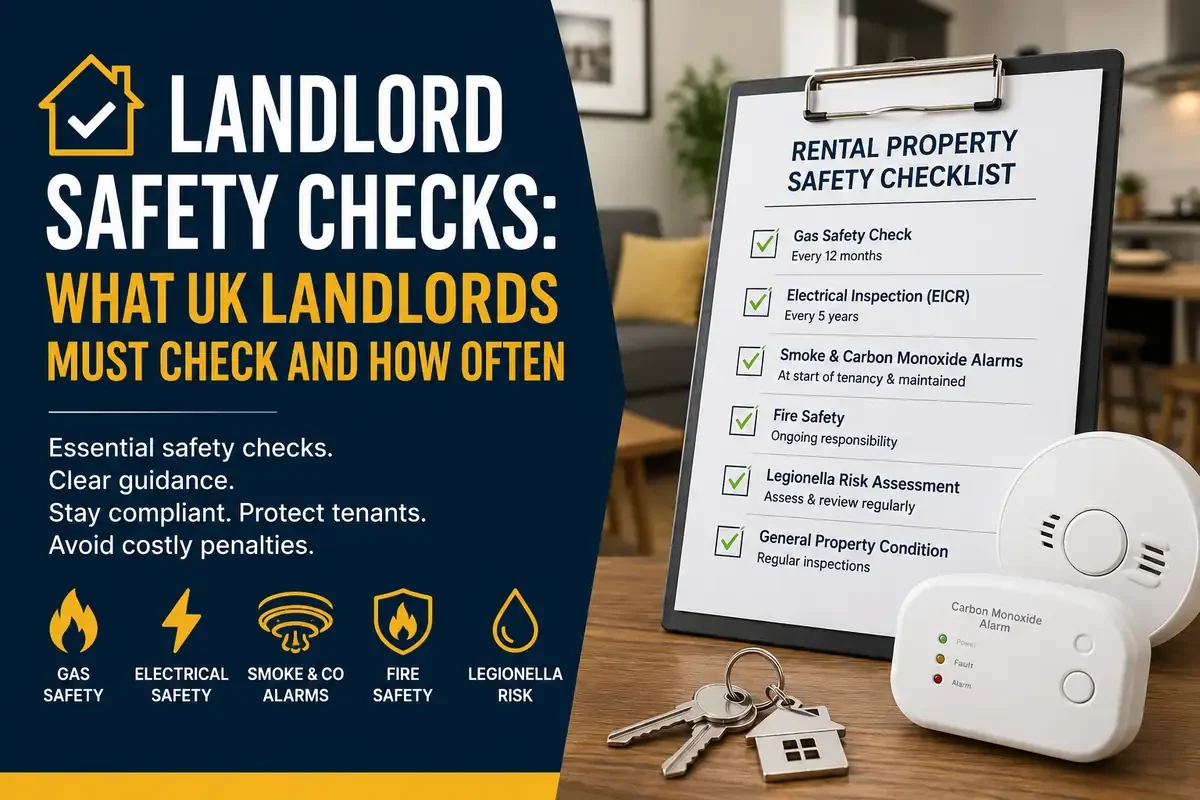
Keeping a rental property safe is one of the most important responsibilities of being a landlord. The landlord safety checks, from gas appliances and electrical installations to smoke alarms, fire safety and the general condition of the property, landlords need to make sure that potential hazards are identified and dealt with before they put tenants at risk.
The difficulty is that landlord safety checks do not all follow the same timetable. Some have clearly defined legal intervals, such as the annual gas safety check, while others require landlords to assess risks, maintain equipment or take action whenever a problem arises. This can make it difficult for landlords to know what needs checking, how often it should be checked and what records they should keep.
Missing an important safety requirement can have serious consequences. As well as potentially putting tenants at risk, landlords may face enforcement action, financial penalties and difficulties demonstrating that they have met their legal responsibilities.
Safety checks form part of a much wider set of legal and landlord compliance responsibilities that landlords need to manage throughout a tenancy.
A good approach is therefore to treat safety as an ongoing part of property management rather than something that is reviewed only when a certificate is due for renewal.
In this guide, we explain the main landlord safety checks UK landlords need to consider, how often key checks should be carried out, what evidence landlords should retain and how regular property inspections can help identify problems before they become more serious.
What Safety Checks Are Landlords Responsible For?
Landlords have a legal responsibility to provide rental properties that are safe and suitable for tenants to live in. This responsibility extends beyond obtaining certificates when they are due. Landlords must also maintain the property, respond appropriately when safety problems are reported and take reasonable steps to identify hazards that could affect tenants.
The exact safety requirements will depend on the type of property, how it is occupied and where it is located. A single-family rental property, for example, may have different fire safety requirements from a house in multiple occupation (HMO). Additional licensing conditions or local authority requirements may also apply to some properties.
Landlords who want a broader overview can also use our complete landlord compliance checklist to review the main requirements that need to be managed across a rental property.
However, there are several key areas of safety that most residential landlords in England need to consider.
Key Areas for Landlord Safety Checks
These include:
- Gas safety: Gas appliances, fittings and flues provided by the landlord must be maintained safely, with a gas safety check generally required every 12 months by a Gas Safe registered engineer.
- Electrical safety: Electrical installations must be safe, with an Electrical Installation Condition Report (EICR) normally required at intervals of no more than five years, unless an earlier inspection is specified.
- Smoke alarms: Required smoke alarms must be installed, and landlords have responsibilities for ensuring they are working at the start of a new tenancy and for repairing or replacing faulty alarms when required.
- Carbon monoxide alarms: Carbon monoxide alarms must be provided in rooms where the legal requirements apply, including rooms containing certain fixed combustion appliances.
- Fire safety: Landlords must consider fire risks, escape routes and other appropriate fire precautions. HMOs can be subject to additional and more extensive fire safety requirements.
- Legionella: Landlords have responsibilities for assessing and controlling the risk of exposure to Legionella bacteria in residential water systems.
- Furniture and furnishings: Where landlords provide upholstered furniture and furnishings, relevant fire resistance requirements may apply.
- General property hazards: Landlords should monitor the condition of the property and address hazards such as damp and mould, unsafe stairs, structural defects, excess cold and other conditions that could threaten tenants’ health or safety.
- Energy performance: Rental properties generally require a valid Energy Performance Certificate (EPC), subject to the rules and exemptions that apply to the property.
Landlord Safety Checks Legal Inspection Interval
It is important to distinguish between a legal inspection interval and an ongoing safety responsibility.
For example, an EICR may normally be required at least every five years, but this does not mean a landlord can ignore an electrical fault that develops between inspections. If a tenant reports exposed wiring, repeated electrical tripping or another potential danger, the landlord should investigate the problem promptly rather than wait until the next scheduled EICR.
The same principle applies to the general condition of the property. Regular inspections can help landlords identify problems such as leaks, damaged handrails, deteriorating flooring, condensation, mould growth or defective alarms before they develop into more serious hazards.
Good safety management therefore combines scheduled statutory checks, regular property inspections, prompt repairs and accurate record keeping. Rather than viewing compliance as a series of certificates to collect, landlords should have a system for monitoring safety throughout the tenancy.
Landlord Safety Checks and How Often They Are Required
Different landlord safety requirements operate on different timescales. Some checks have a specific legal renewal period, while others require ongoing monitoring and action whenever a potential hazard is identified.
The table below provides a quick overview of the main checks landlords should have on their compliance schedule.
| Safety Check | How Often? | What Landlords Should Know |
|---|---|---|
| Gas Safety Check | Every 12 months | Gas appliances, fittings and flues provided by the landlord must be checked by a Gas Safe registered engineer. |
| Electrical Safety / EICR | At least every 5 years | The electrical installation must be inspected and tested by a qualified and competent person. An earlier inspection may be required if stated in the report. |
| Smoke Alarms | At the start of each new tenancy and ongoing | Required alarms should be installed and working when a new tenancy begins. Reported faults should be investigated and repaired or replaced as required. |
| Carbon Monoxide Alarms | At the start of a new tenancy and ongoing | Required alarms must be provided in rooms containing relevant fixed combustion appliances and maintained when faults are reported. |
| Fire Safety | Ongoing | Fire precautions should be kept under review. HMOs and certain buildings can have additional requirements. |
| Legionella Risk | Reviewed when circumstances change | There is no universal requirement for an annual Legionella certificate. Landlords should assess the risk and take appropriate steps to control it. |
| Furniture and Furnishings | Ongoing | Furniture supplied by the landlord should comply with applicable fire safety requirements and remain in a safe condition. |
| General Property Condition | Ongoing | Hazards such as damp, mould, unsafe stairs, leaks, structural problems and defective fixtures should be identified and addressed promptly. |
| EPC | Usually valid for 10 years | A valid Energy Performance Certificate is generally required when a property is marketed for letting, subject to applicable rules and exemptions. |
Don’t Rely on Expiry Dates Alone
A certificate being valid does not necessarily mean that no action is required until its expiry date. If a landlord becomes aware of a safety problem, it should be investigated promptly.
For example, a property may have a valid EICR, but if a tenant reports damaged sockets or exposed wiring, the landlord should arrange appropriate investigation rather than wait for the next scheduled electrical inspection.
A simple compliance calendar can help landlords keep track of certificate expiry dates, planned inspections and remedial work. Keeping these records together also makes it easier to demonstrate that safety responsibilities have been taken seriously throughout the tenancy.
Annual Gas Safety Checks
Gas safety is one of the most important statutory responsibilities for landlords where a rental property contains gas appliances or installations covered by the regulations.
Landlords must arrange an annual gas safety check for relevant gas appliances, fittings and flues they provide, carried out by a Gas Safe registered engineer. This may include boilers, gas fires and other gas appliances supplied as part of the tenancy.
Following the inspection, the engineer provides a Landlord Gas Safety Record, often referred to as a gas safety certificate or CP12. This records the appliances checked, the results of the inspection and any safety issues identified.
When Should Tenants Receive the Gas Safety Record?
Existing tenants should normally receive a copy of the gas safety record within 28 days of the check. New tenants should be provided with the relevant record before they move into the property.
Landlords should also retain copies of gas safety records for at least two years. Keeping certificates, invoices and evidence of any remedial work together can make it easier to demonstrate compliance if questions arise later.
What If a Gas Safety Check Identifies a Problem?
If an engineer identifies an unsafe appliance or installation, landlords should not simply wait until the next annual inspection. Any necessary action should be taken promptly and in accordance with the engineer’s instructions.
It is also sensible to arrange the next inspection well before the existing record becomes due. A compliance calendar or reminder system can help prevent annual gas safety checks from being overlooked, particularly for landlords managing several properties.
Electrical Safety Checks and EICRs
Landlords must ensure that the electrical installations in their rental properties are safe. Government guidance on electrical safety standards for rented properties explains the inspection, reporting and remedial-work requirements that landlords must follow.
In England, this generally means arranging an electrical inspection and test at intervals of no more than five years, although the inspection report may require the next test sooner.
The inspection must be carried out by a qualified and competent person. Following the inspection, the landlord receives an Electrical Installation Condition Report (EICR) showing the condition of the property’s fixed electrical installations, such as wiring, sockets, consumer units and light fittings.
Landlords should provide a copy of the EICR to existing tenants within 28 days of the inspection and to new tenants before they occupy the property. A local authority can also request a copy, which must normally be supplied within seven days.
Regular electrical inspections help landlords identify potential hazards before they become more serious, making a valid EICR for landlords an important part of maintaining a safe rental property.
What If the EICR Identifies Electrical Problems?
An EICR may identify defects requiring remedial or further investigative work. Where this happens, landlords must arrange the required work within the timeframe specified by the regulations, generally within 28 days or sooner if the report requires it.
Once completed, landlords should retain written confirmation that the necessary work has been carried out and provide the required documentation to the tenant and, where applicable, the local authority.
A five-year EICR cycle should never be treated as a reason to ignore problems between inspections. Reports of damaged sockets, burning smells, exposed wiring, repeated electrical tripping or other potential electrical hazards should be investigated promptly.
Smoke and Carbon Monoxide Alarm Checks
Smoke and carbon monoxide alarms are another important part of landlord safety compliance. In England, landlords must ensure that at least one smoke alarm is installed on every storey of a rental property that is used as living accommodation.
Carbon monoxide alarms are also required in any room used as living accommodation that contains a fixed combustion appliance, although gas cookers are excluded from this particular requirement.
Landlords must ensure that required smoke and carbon monoxide alarms are working on the first day of a new tenancy.
Who Is Responsible for Alarms During the Tenancy?
Tenants should regularly test alarms and report faults when they occur. However, once a landlord is informed that a required smoke or carbon monoxide alarm may not be working correctly, the landlord must arrange for it to be repaired or replaced as soon as reasonably practicable.
Landlords should therefore include alarms as part of routine property inspections and keep records of installation, testing, reported faults and replacements.
HMOs and certain licensed properties may be subject to additional fire detection and alarm requirements, so landlords should also check any conditions applying specifically to their property.
Fire Safety Checks in Rental Properties
Fire safety responsibilities vary depending on the type of rental property and how it is occupied. However, landlords should ensure that tenants have safe means of escape and that relevant fire safety measures are properly maintained.
As part of ongoing property management, landlords should look for issues such as blocked escape routes, damaged fire doors where required, unsafe electrical equipment and missing or defective alarms. Any identified fire safety problems should be addressed promptly.
HMOs are subject to additional fire safety requirements, which may include appropriate fire doors, emergency lighting, alarm systems and protected escape routes. Licensing conditions imposed by the local authority may also specify additional measures.
Landlords of flats and properties containing communal areas should be particularly careful because separate fire safety legislation may apply to parts of the building.
There is no single inspection interval that applies to every fire safety measure in every rental property. Fire safety should instead be treated as an ongoing responsibility, with precautions reviewed when the property, occupancy or level of risk changes.
Legionella Risk Assessments
Landlords have a responsibility to assess and control the risk of tenants being exposed to Legionella bacteria through water systems in their rental properties.
Unlike gas safety checks, there is no legal requirement for landlords to obtain an annual Legionella certificate or automatically arrange professional testing every year. For many standard residential properties, the level of risk may be relatively low and a straightforward risk assessment may be sufficient.
Landlords should consider factors such as:
- Water outlets that are rarely used.
- Stagnant water or sections of redundant pipework.
- Water storage systems.
- Whether hot and cold water is maintained at appropriate temperatures.
- Changes to the property’s plumbing or water system.
The assessment should be reviewed if circumstances change, such as after significant plumbing alterations or if a new risk is identified.
Landlords should keep a record of their assessment and any actions taken. Where a property has a more complex water system or the landlord is unsure about the level of risk, obtaining advice from a competent specialist may be appropriate.
Furniture and Furnishings Safety
Where a rental property is furnished or partly furnished, landlords should ensure that any furniture they provide is safe and complies with applicable fire resistance requirements.
The rules can apply to upholstered items such as sofas, armchairs, sofa beds, mattresses, headboards and other supplied furnishings covered by the relevant regulations. Landlords should check appropriate labels and retain purchase records where possible to help demonstrate compliance.
Furniture should also remain in a safe condition throughout the tenancy. Damaged frames, exposed components or other defects that could cause injury should be repaired or the item replaced.
There is no standard annual certificate for furniture safety. Instead, landlords should check supplied furniture during routine property inspections and take action when deterioration or damage creates a potential safety risk.
General Property Safety and Housing Hazards
Landlord safety responsibilities extend beyond certificates and scheduled inspections. The property itself must remain safe and free from serious hazards that could affect a tenant’s health or wellbeing.
Potential problems can include damp and mould, excess cold, structural defects, unsafe stairs, loose handrails, trip hazards, inadequate lighting and dangerous windows or doors. Local authorities can assess housing conditions using the Housing Health and Safety Rating System (HHSRS).
Failing to identify hazards, renew certificates or document remedial work are among the common landlord compliance mistakes that can expose landlords to unnecessary risk.
Landlords should therefore pay attention to the overall condition of the property during routine inspections and respond promptly when tenants report potential hazards.
For example, recurring mould should not simply be cleaned without considering its underlying cause. Leaks, inadequate ventilation, defective heating or building defects may need investigation.
Keeping photographs, inspection notes, repair invoices and correspondence can also provide useful evidence of how identified problems were investigated and resolved.
How Often Should Landlords Inspect Their Rental Property?
There is no single statutory rule requiring every landlord to carry out a general property inspection at a fixed interval. However, regular inspections are a sensible way to identify maintenance and safety problems before they become more serious.
Many landlords choose to inspect their properties approximately every three to six months, depending on the property, tenancy and circumstances. Inspections may also be appropriate following significant repairs or where a particular maintenance issue needs to be monitored.
A routine inspection can help identify:
- Damp, condensation or mould.
- Leaks and water damage.
- Damaged fixtures, flooring or stairs.
- Problems with smoke or carbon monoxide alarms.
- Electrical or heating concerns.
- Signs that maintenance or repairs are required.
Landlords should respect the tenant’s right to quiet enjoyment of the property. For routine inspections, landlords should generally provide at least 24 hours’ written notice and arrange access at a reasonable time, rather than entering without the tenant’s agreement except where the law permits, such as in a genuine emergency.
Keeping a brief dated inspection record, photographs where appropriate and evidence of subsequent repairs can help landlords maintain the property effectively and demonstrate a consistent approach to safety.
Landlord Safety Check Schedule
A simple safety schedule can make it easier to keep track of inspections, certificate renewals and ongoing maintenance. Rather than relying on memory, landlords should record important dates and set reminders well before certificates expire.
Ongoing and Routine Checks
During routine property management and inspections, landlords should look for issues such as:
- Damp, mould, leaks and water damage.
- Damaged stairs, flooring, windows and handrails.
- Faulty smoke or carbon monoxide alarms.
- Electrical or heating problems.
- Fire safety concerns and obstructed escape routes.
- Deterioration of supplied furniture or furnishings.
Reported safety problems should be investigated promptly rather than left until the next scheduled inspection.
Annual Checks
Where gas appliances or installations covered by the regulations are provided, arrange a gas safety check every 12 months by a Gas Safe registered engineer.
This is also a useful point in the compliance calendar to review other safety records and check whether any certificates, licences or assessments are approaching renewal.
Every Five Years
An EICR is generally required at least every five years for applicable privately rented properties in England, unless the previous report specifies that the next inspection should take place sooner.
Every Ten Years
An EPC is generally valid for 10 years, although landlords should check that the property continues to meet the energy-efficiency rules applicable when it is let.
When Circumstances Change
Some safety responsibilities do not operate on a fixed renewal cycle. Legionella risks, fire precautions and the general condition of the property should be reviewed when relevant circumstances change or a new hazard is identified.
Using a digital calendar, property management system or compliance spreadsheet to record these dates can significantly reduce the risk of an important safety requirement being overlooked.
What Records Should Landlords Keep?
Good record keeping helps landlords demonstrate that safety checks have been completed and that reported problems have been dealt with appropriately.
Landlords should retain relevant documents such as:
- Gas Safety Records.
- EICRs and evidence of remedial electrical work.
- EPCs.
- Property inspection reports and dated photographs where appropriate.
- Legionella risk assessment records.
- Invoices and receipts for repairs and maintenance.
- Alarm installation, testing, repair and replacement records.
- Correspondence with tenants about reported safety issues and access arrangements.
Some documents have specific legal retention requirements. For example, landlords should keep copies of Gas Safety Records for at least two years. Other records may be worth retaining for longer as part of the property’s compliance history.
A simple digital folder for each rental property, supported by a compliance calendar showing renewal dates, can make records easier to manage and retrieve when needed.
For a more detailed approach to organising certificates, inspection reports and other property documents, see our guide to landlord record keeping.
What Happens If a Landlord Misses a Safety Check?
Failing to carry out required safety checks can have serious consequences. Depending on the requirement involved, landlords may face financial penalties, enforcement action or other legal consequences.
More importantly, an overdue check could mean that a dangerous problem remains unidentified, putting tenants and the property at risk.
Non-compliance can also create wider difficulties. In some circumstances, failure to meet particular legal requirements can affect a landlord’s ability to use certain possession procedures. Serious or repeated safety failures may also attract greater scrutiny from the local authority.
If a safety check or certificate has expired, landlords should not ignore the problem. The appropriate inspection should be arranged as soon as possible, any necessary remedial work completed and accurate records retained.
The safest approach is prevention. Setting reminders several weeks before important renewal dates gives landlords time to arrange access, appoint the appropriate contractor and deal with any problems identified before a deadline is missed.
Our UK Landlord Compliance Index provides further insight into the wider compliance challenges facing landlords and the areas where greater awareness may be needed.
Frequently Asked Questions About Landlord Safety Checks
What safety checks must a landlord carry out?
The checks required depend on the property and how it is occupied. Common responsibilities include gas safety, electrical safety, smoke and carbon monoxide alarms, fire precautions, Legionella risk management and maintaining the property free from serious hazards.
How often should landlords inspect a rental property?
There is no universal statutory frequency for general landlord inspections. Many landlords choose to inspect approximately every three to six months, depending on the property and circumstances.
Is a gas safety check required every year?
Yes. Where the gas safety regulations apply, relevant gas appliances, fittings and flues provided by the landlord must generally be checked by a Gas Safe registered engineer every 12 months.
How often does a landlord need an EICR?
For applicable privately rented properties in England, electrical installations generally need to be inspected and tested at least every five years, or sooner if the previous report specifies an earlier date.
Does a landlord need an annual Legionella certificate?
No. There is no universal legal requirement for landlords to obtain an annual Legionella certificate. Landlords must assess and control the risk of exposure and review the assessment when appropriate.
Who is responsible for testing smoke alarms?
Landlords must ensure required alarms are working on the first day of a new tenancy. Tenants should test alarms during the tenancy and report problems. Once notified of a fault, the landlord must repair or replace a required alarm as soon as reasonably practicable.
Do all landlords need a fire risk assessment?
Fire safety requirements depend on the type of property and occupation. HMOs and buildings with communal areas can be subject to additional requirements, so landlords should establish which rules apply to their particular property.
Can a tenant refuse access for a safety inspection?
Landlords should normally arrange access with the tenant and provide the required notice. A landlord generally cannot simply enter because an inspection is due, except where there is a genuine emergency or another lawful basis for entry.
How long should landlords keep safety records?
Retention periods vary depending on the document. Gas Safety Records, for example, should be retained for at least two years. Keeping a longer compliance history can also provide useful evidence of inspections, maintenance and remedial work.
What should I do if a safety certificate has expired?
Arrange the required inspection as soon as possible and complete any necessary remedial work. Landlords should not backdate certificates or assume that arranging a future appointment removes the period of non-compliance. A compliance calendar can help prevent the same problem happening again.
Final Thoughts
Landlord safety checks are not simply about obtaining certificates. They are about keeping rental properties safe, identifying potential hazards early and taking action before minor problems become serious.
Some responsibilities have clear deadlines, such as annual gas safety checks and periodic electrical inspections, while others require ongoing monitoring throughout the tenancy. Regular property inspections, prompt repairs and good record keeping can therefore be just as important as remembering certificate renewal dates.
A simple compliance system that records inspection dates, certificate expiry dates, reported problems and completed remedial work can make managing these responsibilities considerably easier.
For landlords who want greater confidence in understanding their responsibilities, Toyin Consulting’s landlord compliance training provides practical guidance on managing compliance and reducing avoidable risks. Landlords looking for broader support with their rental properties and investment decisions can also explore our property coaching for landlords services.
Staying organised and proactive with safety checks helps protect tenants, safeguard your property investment and support a more professional approach to being a landlord.


