
Landlord compliance in the UK has become increasingly complex, with new regulations, evolving safety standards and local licensing schemes making it more challenging for landlords to stay fully compliant. Whether you own a single buy-to-let property or manage a larger portfolio, keeping up with your legal responsibilities requires ongoing attention rather than a one-time checklist. What was compliant a few years ago may no longer meet today’s legal requirements.
Even experienced landlords can make compliance mistakes. In many cases, these errors are not the result of negligence but are caused by changing legislation, overlooked renewal dates or the assumption that existing certificates and documentation remain valid. With multiple compliance obligations to manage, including gas safety, electrical safety, deposit protection, property licensing and tenant documentation, it is easy for important legal requirements to be overlooked.
If you’re new to your legal responsibilities as a landlord, our Landlord Compliance Guide provides a comprehensive overview of the key regulations every UK landlord should understand.
Unfortunately, even seemingly small compliance errors can have significant consequences. Depending on the issue, landlords could face financial penalties, difficulties regaining possession of their property, invalidated insurance policies, enforcement action from local authorities or increased risks to tenant safety. Many of these problems are entirely avoidable with the right knowledge, systems and regular compliance reviews.
This guide explores 15 of the most common landlord compliance mistakes made by UK landlords and explains practical steps you can take to avoid them. By understanding these common pitfalls, you can better protect your tenants, safeguard your investment and ensure your rental property remains compliant with current legal requirements.
Why Landlord Compliance Mistakes Matter
Landlord compliance mistakes can have consequences that extend far beyond a missed certificate or an overdue inspection. Every legal obligation placed on landlords is intended to promote tenant safety, improve housing standards and ensure rental properties are managed responsibly. When these responsibilities are overlooked, landlords may face financial losses, legal complications and damage to their long-term investment.
Understanding the risks associated with non-compliance highlights why staying organised and keeping up to date with changing regulations should be a priority for every landlord.
One way to avoid these problems is to maintain a clear schedule of the safety checks required for rental properties.
Financial Penalties
One of the most immediate consequences of non-compliance is the potential for financial penalties. Depending on the nature of the breach, landlords may receive fixed penalties, civil fines or enforcement notices requiring costly remedial work within strict deadlines. In some situations, landlords may also incur additional legal expenses if disputes arise or enforcement action is taken.
The financial impact often extends beyond the initial penalty, particularly where compliance failures delay property lettings, increase maintenance costs or affect rental income.
Tenant Safety
Many landlord compliance requirements exist to protect tenants from preventable risks. Gas safety inspections, electrical testing, smoke alarms, carbon monoxide alarms and fire safety measures all play an important role in creating a safe living environment.
Failing to meet these obligations increases the likelihood of accidents, injuries or health hazards. Beyond the legal requirements, maintaining high safety standards demonstrates a landlord’s commitment to providing suitable accommodation for tenants.
Legal Liability
Non-compliance can also expose landlords to significant legal liability. If a tenant suffers loss, injury or damage because legal responsibilities were not fulfilled, landlords may face compensation claims, regulatory investigations or, in serious cases, criminal prosecution.
Accurate record keeping, regular inspections and prompt maintenance all help demonstrate that reasonable steps have been taken to meet legal obligations and reduce potential liability.
Property Licensing Issues
Many landlords are unaware that compliance requirements vary depending on the location and type of property they own. Certain rental properties may require HMO licences, selective licensing or additional licensing schemes introduced by local authorities.
Operating a property without the appropriate licence can lead to substantial penalties and may affect a landlord’s ability to continue legally renting the property. Regularly reviewing local authority requirements is therefore an essential part of ongoing compliance.
Insurance Implications
Insurance policies often assume that landlords are complying with all relevant legal requirements. If an incident occurs and a landlord has failed to maintain mandatory safety certificates or meet other legal obligations, insurers may reduce or refuse a claim.
This could leave landlords responsible for repair costs, liability claims or property damage that might otherwise have been covered under their policy.
Damage to Your Reputation
A landlord’s reputation is built on trust, professionalism and the quality of the properties they manage. Compliance failures can result in tenant complaints, negative reviews, disputes and increased scrutiny from local authorities.
Conversely, landlords who consistently maintain compliant, safe and well-managed properties are more likely to build positive relationships with tenants, attract responsible occupants and protect the long-term value of their property portfolio.
The Good News: Most Mistakes Are Preventable
The majority of landlord compliance mistakes are not caused by deliberate negligence but by missed renewal dates, poor record keeping or a lack of awareness when regulations change. Implementing a structured compliance system, maintaining organised documentation and reviewing legal responsibilities regularly can significantly reduce the risk of costly mistakes.
Most compliance failures are preventable with the right systems and regular reviews.
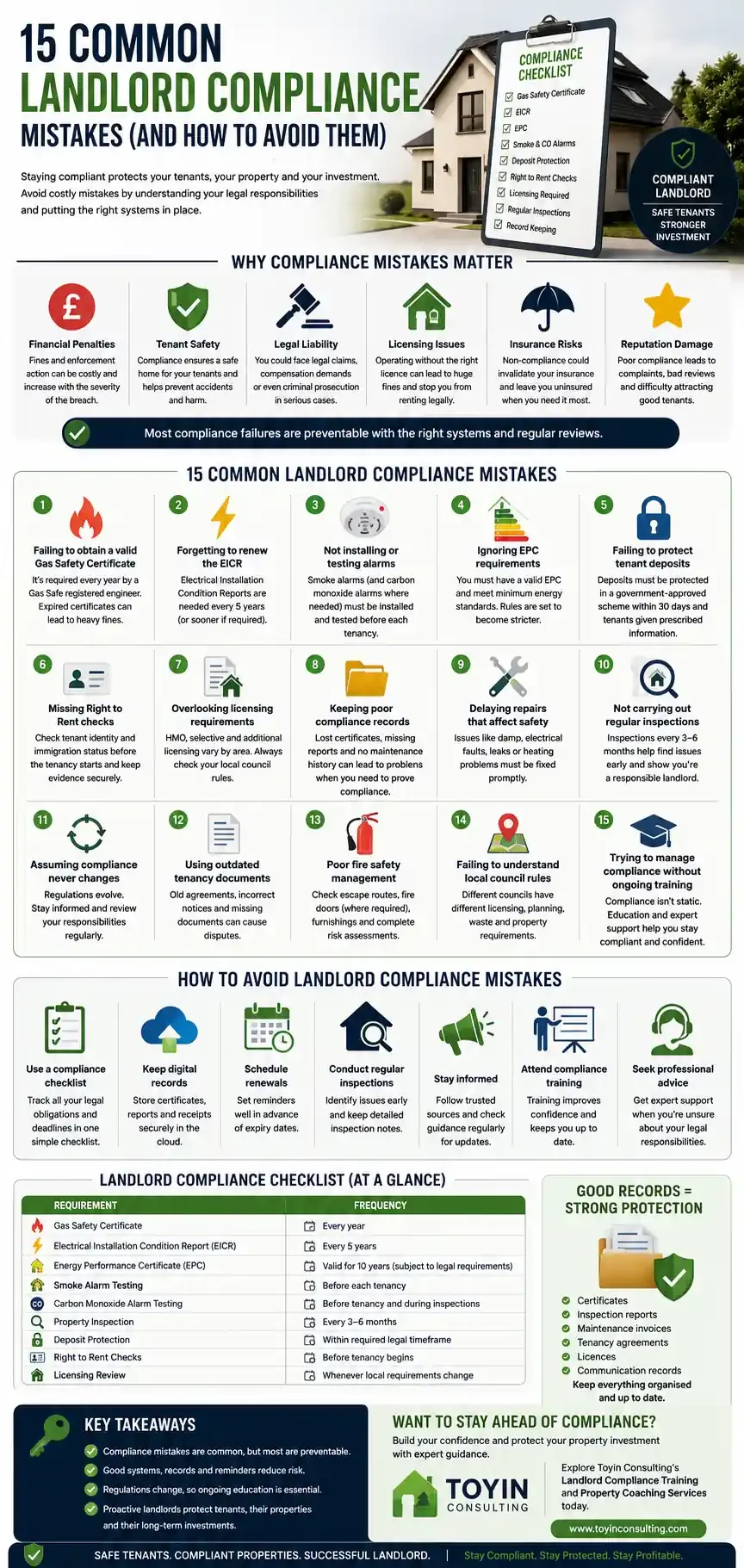
15 Common Landlord Compliance Mistakes
Staying compliant as a landlord involves managing multiple legal responsibilities throughout the life of a tenancy. While some requirements, such as annual gas safety checks, are well known, others are easier to overlook—especially as legislation changes and local authorities introduce new rules. Many compliance issues arise not because landlords intentionally ignore their obligations, but because certificates expire, records become disorganised or important legal updates are missed.
Below are 15 of the most common landlord compliance mistakes made by UK landlords. Understanding these pitfalls can help you reduce risk, protect your tenants and avoid unnecessary legal or financial consequences.
1. Failing to Obtain a Valid Gas Safety Certificate
A valid Gas Safety Certificate is one of the most fundamental legal requirements for landlords who rent out properties with gas appliances. Every rented property with gas installations must undergo an annual gas safety inspection carried out by a qualified Gas Safe registered engineer.
Annual Requirement
The inspection must be completed every 12 months to ensure boilers, gas fires, cookers, pipework and other gas appliances remain safe to use. Allowing the certificate to expire—even by a short period—can place landlords in breach of their legal obligations.
Use a Qualified Engineer
Only engineers who are registered with the Gas Safe Register are legally permitted to carry out gas safety inspections and issue Gas Safety Certificates. Using an unqualified contractor may invalidate the inspection and leave the property non-compliant.
Keep Accurate Records
Landlords should retain copies of every Gas Safety Certificate and provide tenants with the latest certificate within the required timescales. Maintaining organised records also makes future renewals easier to manage.
Potential Consequences
Failure to obtain a valid certificate can lead to enforcement action, substantial fines and, in serious cases, criminal prosecution if tenant safety is compromised.
2. Forgetting to Renew the Electrical Installation Condition Report (EICR)
Electrical safety is another essential aspect of landlord compliance. Many landlords obtain an EICR when purchasing a property but forget that it must be renewed periodically.
Overlooking electrical safety requirements can leave landlords exposed to enforcement action, particularly where inspections are overdue or required remedial work has not been completed.
Five-Year Requirement
In most private rented properties, an Electrical Installation Condition Report should be renewed at least every five years, or sooner if recommended by the electrician.
Applies to Rental Properties
An EICR helps identify wear, damage or defects within the property’s electrical installation before they become dangerous. Landlords should ensure a valid report remains in place throughout the tenancy.
Complete Remedial Work Promptly
If the report identifies issues requiring attention, these should be rectified within the recommended timeframe. Keeping evidence of completed remedial work is equally important.
3. Not Installing or Testing Smoke and Carbon Monoxide Alarms
Smoke and carbon monoxide alarms save lives, yet landlords sometimes overlook installation requirements or fail to test them before new tenants move in.
Meet Legal Requirements
Landlords should ensure the correct number of alarms are installed in accordance with current regulations and are positioned appropriately within the property.
Test Before Each New Tenancy
Alarms should be tested before every new tenancy begins to confirm they are working correctly.
Keep Evidence
Maintaining inspection records or signed inventory documents showing that alarms were tested can provide valuable evidence if questions arise later.
4. Ignoring EPC Requirements
An Energy Performance Certificate (EPC) is another legal requirement that landlords sometimes overlook.
Meet Minimum Standards
Rental properties must satisfy the applicable minimum energy efficiency standards before being let to tenants.
Monitor Renewal Dates
Although an EPC is generally valid for several years, landlords should monitor expiry dates to ensure a valid certificate remains available when required.
Prepare for Future Changes
Energy efficiency legislation continues to evolve, making it important for landlords to monitor future regulatory changes that may affect existing properties.
5. Failing to Protect Tenant Deposits Correctly
Deposit protection remains one of the most common compliance failures among landlords.
Use an Approved Deposit Scheme
Deposits taken under assured shorthold tenancies must generally be protected within an authorised tenancy deposit protection scheme.
Meet the Required Deadlines
Missing the statutory deadline for protecting a deposit can have serious legal consequences.
Provide Prescribed Information
Landlords must also provide tenants with the required prescribed information relating to the deposit protection scheme within the legal timeframe.
6. Missing Right to Rent Checks
Landlords in England have legal responsibilities to verify that prospective tenants have the right to rent property.
Verify Identity
Appropriate identity and immigration documentation should be checked before the tenancy begins.
Keep Records
Copies of all documents should be retained securely in accordance with legal requirements. One of the easiest ways to avoid these problems is to maintain organised records. Our guide on landlord record keeping and documentation explains exactly which documents to keep and how long to retain them.
Carry Out Repeat Checks Where Necessary
Some tenants may require follow-up checks where their right to rent is time-limited.
7. Overlooking Licensing Requirements
Not every rental property requires the same licence, making this one of the areas where landlords are most likely to make mistakes.
HMO Licensing
Certain Houses in Multiple Occupation (HMOs) require mandatory licensing.
Selective Licensing
Some councils operate selective licensing schemes covering all privately rented properties within designated areas.
Additional Licensing
Local authorities may also introduce additional licensing for specific types of rental accommodation.
Check Local Authority Rules
Licensing requirements differ between councils, so landlords should regularly review the rules that apply to each property they own.
8. Keeping Poor Compliance Records
Completing compliance work is only part of the process. Without proper records, landlords may struggle to demonstrate compliance if challenged.
Common Record-Keeping Problems
Examples include:
- Lost safety certificates
- Missing inspection reports
- No maintenance records
- Unorganised repair invoices
- Missing tenant correspondence
Maintaining digital and paper copies of key documents makes compliance easier to manage over the long term.
9. Delaying Repairs That Affect Safety
Ignoring maintenance issues rarely makes them less expensive. In many cases, delays increase both the repair costs and the compliance risks.
Prioritise Safety Issues
Particular attention should be given to:
- Damp and mould
- Electrical defects
- Heating failures
- Water leaks
- Structural concerns
Prompt action helps protect tenants while reducing the likelihood of enforcement action.
10. Not Carrying Out Regular Property Inspections
Routine inspections allow landlords to identify issues before they develop into larger compliance problems.
Identify Problems Early
Regular visits can reveal maintenance issues, unauthorised alterations or developing safety concerns.
Keep Inspection Records
Inspection reports, photographs and maintenance notes create a valuable compliance history.
Maintain Good Communication
Property inspections also provide opportunities to discuss concerns with tenants before they escalate.
11. Assuming Compliance Never Changes
Landlord compliance is not static. Legal requirements continue to evolve as governments introduce new legislation and update existing regulations.
Stay Informed
Landlords should monitor official guidance and industry updates rather than relying on information that may no longer be current.
Review Compliance Regularly
A regular compliance review helps ensure certificates, documentation and legal responsibilities remain up to date.
12. Using Outdated Tenancy Documents
Many landlords continue using tenancy agreements and notices that no longer reflect current legislation.
Common Examples
These include:
- Outdated tenancy agreements
- Incorrect legal notices
- Missing prescribed documents
- Old inventory templates
- Incomplete tenancy packs
Using current documentation reduces the risk of disputes and legal challenges.
13. Poor Fire Safety Management
Fire safety responsibilities extend beyond simply installing smoke alarms.
Key Fire Safety Measures
Landlords should consider:
- Safe escape routes
- Fire doors where legally required
- Compliant furnishings and furniture
- Fire risk assessments where applicable
A proactive approach to fire safety helps protect both tenants and property.
14. Failing to Understand Local Council Requirements
Every local authority has the power to introduce requirements that go beyond national legislation.
Local Rules Can Vary
Landlords should be aware of:
- Local licensing schemes
- Planning restrictions
- Waste management requirements
- Property standards
- Additional local conditions
Assuming that the same rules apply across different council areas can lead to costly compliance mistakes.
15. Trying to Manage Compliance Without Ongoing Training
Perhaps the biggest mistake landlords make is assuming they only need to learn about compliance once.
Compliance Is Always Changing
New legislation, updated guidance and changing local authority policies mean landlords need to continually refresh their knowledge.
Invest in Continuing Education
Regular training helps landlords understand new responsibilities before they become compliance problems.
Seek Professional Guidance
Where regulations are unclear or particularly complex, obtaining advice from experienced property professionals can help landlords make informed decisions and avoid costly mistakes.
Consider Property Coaching and Compliance Training
Many successful landlords combine practical experience with ongoing professional development. Property coaching for landlords and landlord compliance training can provide structured guidance, keep you informed about regulatory changes and help you develop systems that make compliance easier to manage. Rather than reacting to problems after they arise, landlords who invest in ongoing learning are better equipped to protect their tenants, safeguard their investments and build sustainable property portfolios. This is where expert support, such as the coaching and compliance services offered by Toyin Consulting, can provide long-term value.
How to Avoid Landlord Compliance Mistakes
Preventing landlord compliance mistakes is far easier—and often far less expensive—than dealing with the consequences after something has gone wrong. While no landlord can eliminate every risk, adopting a proactive approach to compliance can significantly reduce the likelihood of missed legal obligations, enforcement action or costly disputes.
Successful landlords treat compliance as an ongoing process rather than a one-time task. By putting effective systems in place and regularly reviewing their responsibilities, they can stay organised, respond to regulatory changes and maintain safe, legally compliant rental properties.
Use a Landlord Compliance Checklist
One of the simplest ways to stay organised is to maintain a comprehensive landlord compliance checklist. A checklist helps ensure that important responsibilities are not overlooked and provides a clear overview of upcoming tasks throughout the year.
Your checklist should include key compliance obligations such as:
- Gas Safety Certificate renewals
- Electrical Installation Condition Report (EICR) renewal dates
- Energy Performance Certificate (EPC) validity
- Smoke and carbon monoxide alarm checks
- Deposit protection requirements
- Right to Rent checks
- Property licensing requirements
- Regular property inspections
- Routine maintenance schedules
Reviewing your checklist regularly helps prevent important deadlines from being missed.
Keep Digital Compliance Records
Good record keeping is one of the strongest forms of protection a landlord can have. If a dispute arises or a local authority requests evidence of compliance, organised records can demonstrate that you have fulfilled your legal responsibilities.
Consider storing digital copies of:
- Safety certificates
- Inspection reports
- Maintenance invoices
- Repair records
- Tenant communications
- Deposit protection documents
- Licensing documentation
- Tenancy agreements
Cloud storage or dedicated property management software can make documents easy to access while reducing the risk of losing important paperwork.
Schedule Certificate Renewals in Advance
Many compliance failures occur simply because landlords forget renewal dates. Rather than relying on memory, use digital calendars, reminder apps or property management systems to notify you well before certificates expire.
Scheduling inspections several weeks in advance provides sufficient time to arrange appointments, complete any remedial work and obtain updated certificates without creating periods of non-compliance.
A simple reminder system can prevent some of the most common and avoidable compliance mistakes.
Carry Out Regular Property Inspections
Routine property inspections allow landlords to identify maintenance issues before they develop into more serious compliance concerns.
During inspections, you can:
- Check the condition of safety equipment.
- Identify signs of damp, mould or water damage.
- Spot electrical or heating issues.
- Assess general property maintenance.
- Confirm tenants are reporting any concerns.
Keeping written inspection reports and photographs also creates a valuable record of the property’s condition over time.
Stay Informed About Changing Regulations
Landlord compliance legislation continues to evolve. New safety requirements, licensing schemes and energy efficiency standards are introduced regularly, making it important to stay informed rather than relying on outdated information.
As landlord legislation continues to evolve, it’s good practice to review the official guidance for landlords regularly to ensure you understand your current legal responsibilities and any recent regulatory changes.
Useful ways to keep up to date include:
- Following official government guidance.
- Monitoring local authority announcements.
- Reading trusted property industry publications.
- Joining professional landlord organisations.
- Subscribing to compliance newsletters.
Regularly reviewing changes helps landlords prepare before new requirements come into force.
Invest in Landlord Compliance Training
Even experienced landlords benefit from ongoing professional development. Compliance training provides structured guidance on current legal responsibilities, explains regulatory updates and helps landlords understand how different compliance requirements work together.
Training can also improve confidence when managing more complex situations, such as licensing requirements, documentation or changes in legislation.
Rather than reacting to compliance problems after they occur, well-informed landlords are better equipped to prevent them from happening in the first place.
Seek Professional Advice When You’re Unsure
No landlord is expected to know every aspect of housing legislation. If you’re uncertain about a compliance requirement, seeking professional advice early can prevent small questions from becoming expensive problems.
Depending on the situation, professional support may include:
- Property compliance specialists.
- Property coaches and mentors.
- Letting professionals.
- Qualified surveyors.
- Solicitors specialising in landlord and tenant law.
Obtaining expert advice before making important decisions can save considerable time, money and stress.
Build a Proactive Compliance System
The most successful landlords don’t rely on memory or deal with compliance only when something goes wrong. They build systems that make compliance part of their normal property management routine. By using checklists, keeping organised records, scheduling renewals, carrying out regular inspections and investing in ongoing learning, landlords can dramatically reduce the risk of non-compliance.
A proactive approach not only helps you meet your legal responsibilities but also protects your tenants, preserves the value of your property investment and gives you greater confidence that your rental business is operating to the highest standards.
Want to see how these issues compare with the wider private rented sector? Explore the UK Landlord Compliance Index 2026 for an evidence-based analysis of landlord compliance across England.
Landlord Compliance Checklist
Managing landlord compliance becomes much easier when you have a clear schedule of the key legal requirements and when they need to be completed. While some obligations are annual, others are only required every few years or at specific stages of a tenancy. Keeping track of these responsibilities helps reduce the risk of missed deadlines, expired certificates and avoidable compliance breaches.
The checklist below provides a practical overview of some of the most important compliance tasks that UK landlords should monitor. It is intended as a general guide and should be used alongside any additional requirements that apply to your property, tenancy type or local authority.
Essential Landlord Compliance Checklist
| Compliance Requirement | Recommended Frequency |
|---|---|
| Gas Safety Certificate | Every year |
| Electrical Installation Condition Report (EICR) | Every 5 years, or sooner if recommended |
| Energy Performance Certificate (EPC) | Valid for up to 10 years (subject to current legal requirements) |
| Smoke Alarm Testing | Before each new tenancy begins |
| Carbon Monoxide Alarm Testing | Before each tenancy and during routine property inspections |
| Property Inspections | Every 3–6 months (or as appropriate for the tenancy) |
| Deposit Protection | Within the legally required timeframe after receiving the deposit |
| Right to Rent Checks | Before the tenancy begins (with follow-up checks where legally required) |
| Property Licensing Review | Whenever local authority licensing requirements change or before letting a property |
| Fire Safety Equipment Checks | During routine inspections and before each new tenancy |
| Maintenance and Repair Review | Ongoing, with safety-related issues addressed promptly |
| Compliance Record Review | At least once a year to ensure all certificates and documents remain up to date |
How to Use This Checklist
This checklist should form part of your regular property management routine rather than being used only when a tenancy starts or ends. Consider adding each requirement to a digital calendar or property management system so that reminders are generated well before renewal dates or inspection deadlines.
It’s also good practice to keep copies of all certificates, inspection reports, maintenance records and tenant communications in a secure digital filing system. Having organised records makes it easier to demonstrate compliance if requested by tenants, insurers or local authorities.
Remember that landlord compliance requirements can change over time, and some obligations vary depending on factors such as the property’s location, whether it is an HMO and the licensing schemes operated by your local council. Reviewing this checklist regularly alongside current legal guidance will help ensure your compliance systems remain effective and up to date.
Frequently Asked Questions
What is landlord compliance?
Landlord compliance refers to the legal responsibilities that landlords must meet when renting out residential property. These responsibilities include maintaining property safety, protecting tenant deposits, obtaining required certificates, complying with licensing requirements and following housing legislation designed to protect tenants.
What happens if I fail landlord compliance?
Failure to comply with landlord legislation can result in financial penalties, enforcement action by local authorities, legal disputes, difficulties regaining possession of your property and, in some cases, criminal prosecution. The consequences depend on the nature and severity of the breach.
Can landlords be fined for non-compliance?
Yes. Landlords can face significant fines for failing to meet certain legal obligations, such as licensing requirements, gas safety regulations or tenancy deposit protection rules. The level of the penalty varies depending on the specific breach.
Do all landlords need an Electrical Installation Condition Report (EICR)?
Most privately rented properties require a valid Electrical Installation Condition Report (EICR). The report confirms that the property’s electrical installation has been inspected and tested and meets the required safety standards.
How often is a Gas Safety Certificate required?
A Gas Safety Certificate must generally be renewed every 12 months for rental properties with gas appliances. The inspection must be carried out by a Gas Safe registered engineer.
Do I need an Energy Performance Certificate (EPC)?
In most cases, yes. Landlords are generally required to have a valid Energy Performance Certificate (EPC) before letting a property. The certificate provides information about the property’s energy efficiency and is normally valid for up to 10 years, subject to current legal requirements.
What is landlord licensing?
Landlord licensing is a system used by local authorities to regulate certain rental properties. Depending on the property type and location, landlords may require an HMO licence, selective licence or additional licence before renting out their property.
What happens if I miss a certificate renewal?
Allowing a required certificate to expire may place you in breach of your legal obligations. Depending on the certificate involved, this could result in enforcement action, financial penalties or difficulties demonstrating compliance if a dispute arises.
Can tenants report landlords for compliance issues?
Yes. Tenants can report concerns about property safety or landlord compliance to their local authority. Councils have powers to investigate complaints and, where appropriate, take enforcement action.
How do I keep compliance records?
Many landlords maintain both digital and paper copies of important documents. Using cloud storage, property management software or organised filing systems makes it easier to retrieve certificates, inspection reports and maintenance records when needed.
What documents should landlords keep?
Landlords should retain documents such as Gas Safety Certificates, EICRs, EPCs, tenancy agreements, deposit protection records, property inspection reports, maintenance invoices, repair records, licensing documentation and important tenant correspondence.
Do landlords need smoke alarms?
Yes. Landlords are generally required to install smoke alarms in accordance with current legal requirements and ensure they are working at the start of each new tenancy.
Are carbon monoxide alarms compulsory?
Yes, in situations where current regulations require them. Landlords should ensure carbon monoxide alarms are installed where legally necessary and test them before a new tenancy begins.
What is the biggest landlord compliance mistake?
One of the biggest mistakes is assuming compliance is a one-off exercise. Landlord responsibilities continue throughout the tenancy, and failing to monitor certificate renewals, legal updates and maintenance obligations can lead to avoidable compliance failures.
How often should landlords inspect their properties?
Many landlords carry out routine property inspections every three to six months, although the appropriate frequency may vary depending on the tenancy and property. Regular inspections help identify maintenance issues before they become more serious.
Is landlord compliance training worth it?
For many landlords, compliance training is a worthwhile investment. It helps explain legal responsibilities, keeps landlords informed about regulatory changes and reduces the likelihood of making costly compliance mistakes.
Can letting agents manage landlord compliance?
Many letting agents offer compliance management services, such as arranging safety inspections and monitoring certificate renewals. However, landlords remain legally responsible for ensuring their properties comply with applicable legislation, even when using an agent.
What happens if landlord regulations change?
New legislation or updated guidance may introduce additional responsibilities or alter existing requirements. Landlords should review their compliance procedures regularly to ensure they remain up to date.
How can I stay updated with landlord compliance requirements?
You can stay informed by following official government guidance, monitoring your local authority’s announcements, reading trusted property industry publications, attending landlord training courses and working with experienced property professionals.
Where can landlords get compliance support?
Landlords can obtain support from compliance specialists, experienced property coaches, qualified letting professionals, solicitors specialising in landlord and tenant law, and reputable landlord training providers. Seeking professional advice early can help prevent costly mistakes and ensure your rental property remains compliant.
Is landlord compliance only important for large property portfolios?
No. Compliance requirements apply whether you own a single rental property or a large portfolio. Every landlord has legal responsibilities that must be met regardless of the number of properties they manage.
Can poor compliance affect my landlord insurance?
Yes. Some insurance policies require landlords to comply with legal safety obligations and maintain valid certificates. Failure to do so could affect the outcome of an insurance claim.
Should I keep digital copies of compliance documents?
Yes. Keeping digital copies of certificates, inspection reports, tenancy documents and maintenance records makes them easier to organise, retrieve and share if required. Digital record-keeping also reduces the risk of losing important paperwork.
How often should I review my landlord compliance procedures?
It’s good practice to review your compliance procedures at least once a year and whenever there is a change in legislation, property licensing requirements or your tenancy arrangements. Regular reviews help ensure nothing important is overlooked.
Final Thoughts
Landlord compliance mistakes are more common than many people realise, but they are rarely unavoidable. Most compliance issues arise from missed renewal dates, outdated documentation, changing regulations or poor record-keeping rather than intentional wrongdoing. The good news is that these risks can be significantly reduced by putting effective systems in place and reviewing your compliance responsibilities regularly.
Using a structured compliance checklist, maintaining organised records, scheduling inspections and staying informed about legal changes can help you avoid costly mistakes before they become serious problems. Ongoing learning is equally important, as landlord legislation continues to evolve and new requirements are introduced.
Ultimately, proactive landlords do more than simply meet their legal obligations—they create safer homes for their tenants, protect the value of their property investments and reduce the likelihood of disputes, penalties and unexpected costs.
If you’re looking to strengthen your knowledge and manage your rental properties with greater confidence, explore Toyin Consulting’s Landlord Compliance Training and Property Coaching for Landlords. Our practical guidance is designed to help landlords understand their legal responsibilities, stay up to date with changing regulations and build systems that support long-term compliance and successful property management.


