
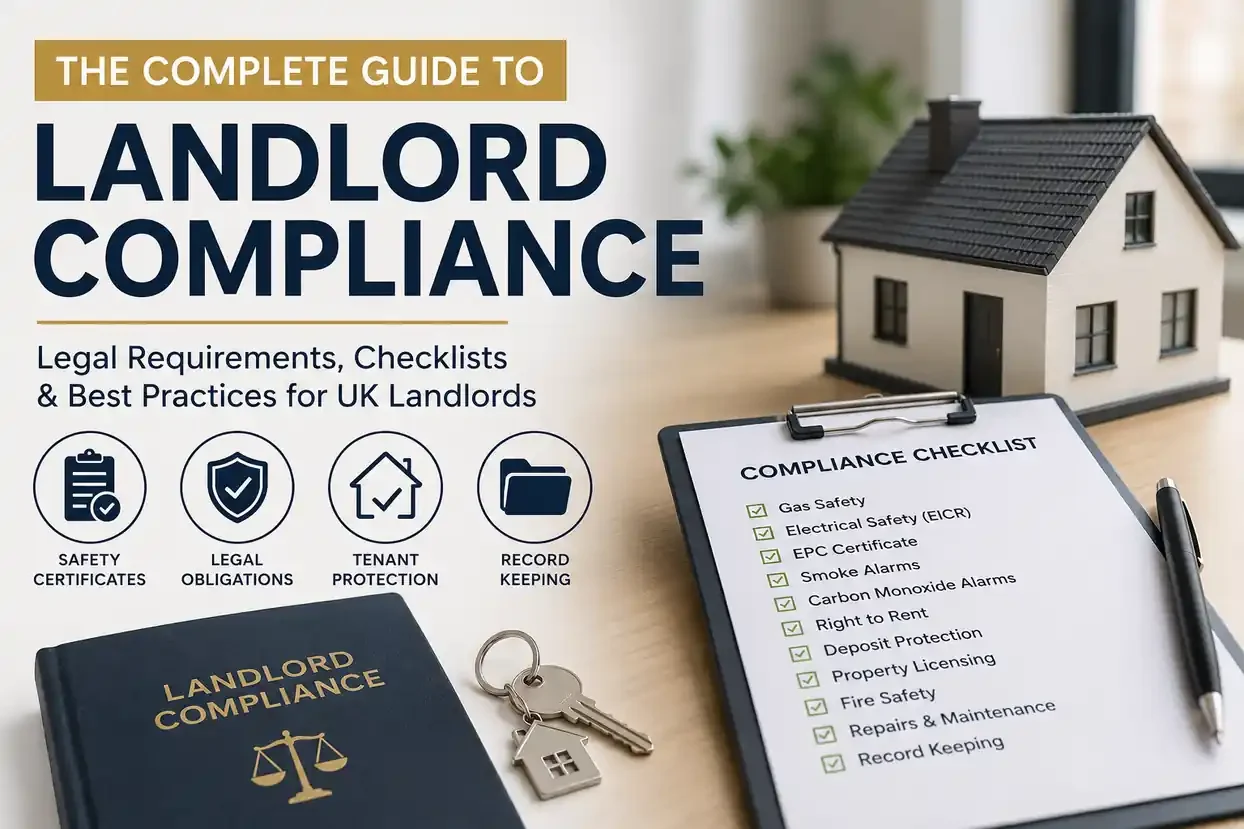
Landlord Compliance Guide is your complete resource for understanding the legal responsibilities that come with letting residential property in the UK. Whether you’re a first-time landlord or managing a growing property portfolio, staying compliant with current legislation is essential for protecting your tenants, your investment, and your reputation.
Landlord compliance covers a wide range of legal requirements, from gas and electrical safety to energy performance, deposit protection, fire safety, licensing and Right to Rent checks. Failing to meet these obligations can lead to substantial financial penalties, invalid insurance, difficulties regaining possession of your property, and, in some cases, criminal prosecution.
The good news is that compliance doesn’t have to be complicated. With the right knowledge, systems and regular checks, landlords can meet their legal obligations with confidence while providing safe, well-managed homes for their tenants.
This comprehensive guide explains every key area of UK landlord compliance in clear, practical terms. You’ll learn what the law requires, when different compliance checks must be carried out, the documents you should keep, common mistakes to avoid, and how to build a simple compliance process that protects both your tenants and your property investment.
What Is Landlord Compliance?
Landlord compliance is the process of meeting all the legal responsibilities and safety standards required when renting out a residential property. In simple terms, it means ensuring your property is safe, well maintained and managed in accordance with UK laws and regulations before, during and at the end of a tenancy.
Compliance isn’t a one-off task. Some obligations must be completed before a tenant moves in, while others must be reviewed or renewed throughout the tenancy. For example, landlords are responsible for obtaining valid gas safety certificates, arranging Electrical Installation Condition Reports (EICRs), providing an Energy Performance Certificate (EPC), carrying out Right to Rent checks where required, installing smoke and carbon monoxide alarms, protecting tenancy deposits, and complying with any licensing requirements that apply to the property.
The exact legal requirements can vary depending on factors such as the property’s location, the type of tenancy and whether the property is a standard buy-to-let or a House in Multiple Occupation (HMO). However, every landlord has a legal duty to provide accommodation that is safe, fit for human habitation and compliant with the relevant legislation.
For the latest statutory guidance, landlords should also refer to the official UK Government guidance on renting out property.
Staying compliant not only helps you meet your legal obligations but also reduces the risk of costly fines, legal disputes and enforcement action. More importantly, it helps create a safer living environment for tenants while protecting the long-term value of your property investment.
Key Areas of Landlord Compliance
Although landlord compliance covers a wide range of responsibilities, the main areas include:
- Gas safety
- Electrical safety (EICR)
- Energy Performance Certificates (EPCs)
- Smoke and carbon monoxide alarms
- Right to Rent checks
- Tenancy deposit protection
- Property licensing
- Fire safety requirements
- Repairs and maintenance
- HMO compliance (where applicable)
- Landlord record keeping and documentation
Each of these areas is explained in detail throughout this guide, helping you understand what is required, when action needs to be taken and how to remain compliant with confidence.
Why Landlord Compliance Matters
Landlord compliance is about far more than meeting legal requirements. It helps protect your tenants, safeguards your property investment and reduces the risk of costly legal and financial consequences. Whether you own a single buy-to-let property or manage a growing portfolio, understanding why compliance matters can help you make better decisions and avoid problems that could have been prevented.
Compliance also plays an important role in building a successful and sustainable rental business. Landlords who understand and meet their legal obligations are more likely to attract responsible tenants, reduce disputes, avoid unnecessary delays and demonstrate that they take their responsibilities seriously. This proactive approach can contribute to longer tenancies, better property condition and a stronger professional reputation.
In addition, landlord compliance is not just about avoiding penalties. It provides peace of mind by ensuring that your property is being managed to the required legal standards. When you have the correct certificates, inspections, documentation and management processes in place, you can focus on growing your property portfolio with confidence, knowing that you are protecting both your tenants and your investment.
Protecting Tenant Safety
One of the primary purposes of landlord compliance is to ensure that tenants live in a safe and habitable home. Regular gas safety inspections, electrical testing, smoke and carbon monoxide alarms, fire safety measures and timely repairs all help reduce the risk of accidents, injuries and health hazards.
Providing safe accommodation is not only a legal obligation but also demonstrates professionalism and builds trust with your tenants.
Avoiding Criminal Prosecution and Financial Penalties
Many landlord compliance requirements are legal obligations rather than recommendations. Failing to comply with certain regulations can result in significant fines, enforcement action or criminal prosecution, depending on the nature and seriousness of the breach.
For example, failing to carry out required safety checks or ignoring licensing requirements can expose landlords to substantial penalties and legal action by local authorities or other enforcement bodies. Staying compliant helps minimise these risks and gives you greater confidence that your property is being managed responsibly.
Reducing the Risk of Rent Repayment Orders
In some circumstances, landlords who fail to comply with housing legislation may be required to repay rent through a Rent Repayment Order (RRO). These orders can arise where certain housing offences have been committed, such as operating a property that requires a licence without obtaining one.
Understanding your legal obligations and ensuring your property remains compliant can significantly reduce the risk of facing this type of enforcement action.
Protecting Your Insurance Cover
Many landlord insurance policies require property owners to comply with relevant legal and safety obligations. If a serious incident occurs and it is found that required compliance measures were not in place, your insurer may reduce or reject a claim, depending on the policy terms and circumstances.
Keeping important compliance documents up to date, such as gas safety certificates and electrical inspection reports, can help demonstrate that you have fulfilled your responsibilities as a landlord.
Meeting Mortgage Conditions
If your property is financed with a buy-to-let mortgage, your lender may require you to maintain the property in accordance with all applicable laws and regulations. Failing to meet these obligations could place you in breach of your mortgage conditions.
Remaining compliant not only protects your relationship with your lender but also helps preserve the long-term security of your investment.
Protecting Your Property Investment
For most landlords, property is one of their largest financial assets. Poor compliance can lead to unexpected costs, legal disputes, property damage, extended void periods and reputational harm.
By treating compliance as an ongoing part of property management rather than a one-off exercise, you can reduce risk, protect rental income, maintain the value of your property and create a better experience for your tenants.
Compliance Is an Investment, Not an Expense
Some landlords view compliance as another cost of owning rental property. In reality, it is an investment in protecting your tenants, preserving your property’s value and reducing the likelihood of expensive legal or financial problems in the future.
Developing a simple compliance system and keeping accurate records can save significant time, money and stress while helping you remain confident that your property continues to meet its legal obligations.
Essential Landlord Compliance Checklist
Landlord compliance involves a number of legal duties that apply before a tenancy begins and throughout the time a property is let. While some requirements apply to every landlord, others depend on the type of property, the location and the tenancy arrangement. Use the checklist below as an overview of the key compliance areas. Each section links to a dedicated guide that explains the requirements in greater detail.
Different safety requirements operate on different timescales, so landlords should understand what safety checks landlords must carry out and how often.
Gas Safety
If your property has gas appliances, you must arrange an annual gas safety inspection by a Gas Safe registered engineer and provide tenants with a valid Gas Safety Certificate. Regular servicing also helps keep appliances operating safely and efficiently.
Electrical Safety (EICR)
Private rented properties must have a valid Electrical Installation Condition Report (EICR), completed by a qualified electrician at least every five years, or sooner if recommended. Any identified safety issues should be addressed within the required timescales.
Electrical safety is a key part of property compliance, and landlords should understand the EICR requirements for landlords, including how often inspections are required and what action must be taken when electrical problems are identified.
Energy Performance Certificate (EPC)
Most rental properties require a valid Energy Performance Certificate before they are marketed or let. The EPC provides information about the property’s energy efficiency and confirms whether it meets the minimum energy efficiency standards.
Smoke Alarms
Smoke alarms must be installed on every storey of a rental property where there is a room used as living accommodation. Landlords should ensure the alarms are working at the start of each new tenancy.
Carbon Monoxide Alarms
Carbon monoxide alarms are required in rooms containing fixed combustion appliances where the regulations apply. Testing alarms before each tenancy begins helps ensure tenants are protected from this invisible and potentially fatal gas.
Right to Rent Checks
Landlords in England are required to verify that prospective tenants have the legal right to rent property before a tenancy starts. Keeping accurate records of these checks forms an important part of your compliance responsibilities.
Tenancy Deposit Protection
If you take a tenancy deposit for an Assured Shorthold Tenancy, it must usually be protected in an approved tenancy deposit protection scheme within the legal deadline. Prescribed information must also be provided to the tenant.
Property Licensing
Depending on the location and type of property, you may require a mandatory HMO licence, an additional licence or a selective licence issued by the local authority. Always check your local council’s licensing requirements before letting a property.
Fire Safety
Landlords have a legal duty to minimise fire risks within their rental properties. This may include providing suitable fire detection, maintaining escape routes and meeting additional fire safety standards for Houses in Multiple Occupation (HMOs).
Repairs and Maintenance
Landlords are responsible for keeping the structure of the property and many key installations, such as heating, water, gas and electricity, in good repair. Promptly addressing maintenance issues helps protect both tenants and your investment.
Legionella Risk Assessment
Landlords should assess and manage the risk of exposure to Legionella bacteria within their water systems. In most residential properties, a straightforward risk assessment and sensible control measures are sufficient.
Furniture and Furnishings Regulations
Any upholstered furniture supplied with a furnished rental property must comply with the Furniture and Furnishings (Fire) (Safety) Regulations. Items that do not meet the required fire safety standards should be replaced.
HMO Compliance
Houses in Multiple Occupation are subject to additional legal requirements covering areas such as licensing, fire safety, room sizes, waste management and property standards. Landlords should ensure they understand the rules that apply to their specific HMO.
Record Keeping and Documentation
Maintaining organised records is an essential part of landlord compliance. Keep copies of certificates, inspection reports, tenancy agreements, deposit protection documents, maintenance records and any correspondence relating to compliance, as these may be required if questions or disputes arise.
Good compliance depends on more than obtaining the correct certificates. Keeping accurate records is equally important. Our Landlord Record Keeping Guide explains which documents every UK landlord should retain and how to organise them effectively.
Landlord Compliance Timeline
Landlord compliance is an ongoing responsibility rather than a one-time task. Certain legal requirements must be completed before a tenant moves into the property, while others continue throughout the tenancy or must be renewed at regular intervals. Following a clear compliance timeline can help you stay organised, reduce the risk of missing important deadlines and ensure your property remains legally compliant.
Before the Tenant Moves In
The period before a tenancy begins is one of the most important stages for landlord compliance. Before handing over the keys, you should ensure the property is safe, legally compliant and ready for occupation.
Your pre-tenancy compliance checklist should include:
- Obtain a valid Gas Safety Certificate (where applicable).
- Ensure a valid Electrical Installation Condition Report (EICR) is in place.
- Confirm the property has a valid Energy Performance Certificate (EPC).
- Install and test smoke alarms and carbon monoxide alarms where required.
- Carry out Right to Rent checks (England only).
- Protect the tenancy deposit within an approved scheme if a deposit is taken.
- Check whether the property requires a landlord licence.
- Address any repairs or maintenance issues before occupation.
- Provide tenants with all legally required documents.
Completing these steps before the tenancy starts helps create a safe environment for tenants and reduces the risk of future compliance issues.
During the Tenancy
Landlord responsibilities continue throughout the tenancy. Compliance is not simply about obtaining certificates; it also involves maintaining the property and responding appropriately when issues arise.
During the tenancy, landlords should:
- Carry out repairs within a reasonable timeframe.
- Maintain gas, electrical and water installations.
- Respond promptly to reported safety concerns.
- Conduct periodic property inspections.
- Keep records of inspections, repairs and maintenance.
- Monitor licence conditions where applicable.
- Ensure fire safety equipment remains in good working order.
Regular communication with tenants and proactive property management can help identify potential issues before they become expensive problems.
Annual and Periodic Checks
Some compliance obligations must be renewed or reviewed at specified intervals. Keeping a compliance calendar is one of the simplest ways to avoid missing important deadlines.
Examples include:
- Annual Gas Safety Certificate renewal.
- Five-yearly Electrical Installation Condition Report (or earlier if recommended).
- Renewal of property licences where applicable.
- Periodic review of Legionella risks.
- Testing smoke and carbon monoxide alarms at the start of each new tenancy.
- Reviewing insurance cover to ensure it remains suitable.
- Updating compliance records and documentation.
Scheduling reminders well before expiry dates allows enough time to arrange inspections and complete any necessary remedial work.
At the End of the Tenancy
The end of a tenancy provides an opportunity to prepare the property for its next occupants while ensuring all legal obligations have been met.
Before re-letting the property, landlords should:
- Carry out a final property inspection.
- Assess the condition of the property against the inventory.
- Deal with any deposit deductions in accordance with tenancy deposit rules.
- Complete any necessary repairs or maintenance.
- Test smoke and carbon monoxide alarms.
- Check whether compliance certificates are still valid.
- Review whether any new legislation has come into force before marketing the property again.
Treating every new tenancy as a fresh compliance check helps ensure your property continues to meet current legal requirements and provides peace of mind for both you and your future tenants.
For a broader understanding of how landlords are performing across England, read our UK Landlord Compliance Index 2026, which analyses government data, enforcement trends and regulatory developments affecting the private rented sector.
Common Compliance Mistakes Made By Landlords
Even experienced landlords can overlook important compliance requirements. In many cases, problems arise not because landlords intentionally ignore the law, but because they are unaware of changing regulations, assume a previous certificate is still valid or simply fail to keep accurate records. Avoiding these common mistakes can help protect your tenants, reduce legal risks and safeguard your property investment.
The consequences of non-compliance can extend far beyond financial penalties. A missed inspection, an expired safety certificate or failure to meet licensing requirements can lead to delays in letting your property, disputes with tenants, enforcement action by the local authority and, in some cases, difficulties regaining possession of your property. These issues can be both costly and time-consuming to resolve.
The good news is that most compliance mistakes are entirely preventable. By understanding your legal responsibilities, keeping accurate records, reviewing your compliance obligations regularly and putting simple management systems in place, you can significantly reduce risk and ensure your rental property remains compliant throughout every stage of the tenancy.
Assuming Compliance Is a One-Off Task
One of the biggest misconceptions is that compliance ends once a tenant moves into the property. In reality, many legal responsibilities continue throughout the tenancy, including maintaining the property, renewing certificates and responding promptly to repair requests.
Missing Certificate Renewal Dates
Gas Safety Certificates, Electrical Installation Condition Reports (EICRs) and property licences all have expiry dates. Allowing these documents to lapse can leave you in breach of your legal obligations and may expose you to enforcement action.
Keeping a compliance calendar with reminders can help ensure important deadlines are never missed.
Ignoring Small Repairs
Minor maintenance issues can quickly become larger and more expensive problems if left unresolved. Promptly dealing with repairs not only helps maintain compliance but also demonstrates that you are meeting your legal responsibilities as a landlord.
Failing to Protect the Tenant’s Deposit Correctly
Where tenancy deposit protection rules apply, landlords must protect deposits within the required timeframe and provide tenants with the prescribed information. Missing either requirement can result in financial penalties and may affect your ability to regain possession of the property.
Overlooking Right to Rent Requirements
Landlords in England must carry out Right to Rent checks before a tenancy begins. Failing to verify and record a tenant’s right to rent can lead to significant penalties.
Not Understanding Local Licensing Requirements
Many landlords assume licensing only applies to large HMOs. However, some local authorities operate additional or selective licensing schemes that apply to a much wider range of rental properties. Always check the licensing rules for the area where your property is located.
Poor Record Keeping
Compliance is not only about completing legal requirements but also being able to demonstrate that you have done so. Losing certificates, inspection reports or maintenance records can make it difficult to prove compliance if requested by tenants, local authorities, lenders or insurers.
Keeping digital and paper copies of important documents can save considerable time and stress.
Relying on Outdated Information
Housing legislation changes regularly. Advice that was accurate a few years ago may no longer reflect current legal requirements. Landlords should regularly review official guidance or seek professional advice to ensure they remain up to date.
Failing to Carry Out Regular Property Inspections
Routine property inspections help identify maintenance issues, safety concerns and potential compliance risks before they become serious. Inspections should be carried out at reasonable intervals and with appropriate notice given to tenants.
Treating Compliance as an Unnecessary Expense
Some landlords delay inspections or maintenance work to reduce costs. In reality, non-compliance often proves far more expensive through fines, legal disputes, invalid insurance claims, property damage or extended void periods.
Investing in compliance from the outset is usually far more cost-effective than dealing with the consequences of getting it wrong.
Waiting Until a Problem Occurs
Some landlords only review their compliance after receiving a complaint, insurance query or contact from the local authority. By then, it may already be too late to avoid financial or legal consequences.
A proactive approach, with regular reviews and planned compliance checks, is the most effective way to minimise risk and protect both your tenants and your investment.
How to Avoid These Mistakes
Most compliance issues can be prevented with good organisation and a proactive approach. Consider creating a simple compliance system that includes:
- A landlord compliance checklist.
- A calendar of inspection and renewal dates.
- Secure storage for certificates and important documents.
- Regular property inspections.
- Prompt responses to maintenance issues.
- Ongoing training to stay up to date with changing legislation.
By treating compliance as an integral part of managing your rental property, you can reduce risk, provide safer accommodation and build a more successful and sustainable property portfolio.
How Professional Landlord Compliance Training Helps
Landlord legislation is constantly evolving, and keeping up with new regulations can be challenging, particularly for landlords managing properties alongside other personal or professional commitments. While online articles and government guidance provide valuable information, they often require significant time to interpret and apply correctly to individual circumstances.
Professional landlord compliance training bridges that gap by turning complex legislation into practical knowledge that landlords can confidently apply to their own properties. Rather than simply explaining what the law says, quality training focuses on what landlords need to do, when they need to do it and how to remain compliant throughout the lifecycle of a tenancy.
Even experienced landlords can overlook important compliance requirements. In many cases, problems arise not because landlords intentionally ignore the law, but because they are unaware of changing regulations, assume a previous certificate is still valid or simply fail to keep accurate records. Avoiding these common mistakes can help protect your tenants, reduce legal risks and safeguard your property investment.
The consequences of non-compliance can extend far beyond financial penalties. A missed inspection, an expired safety certificate or failure to meet licensing requirements can lead to delays in letting your property, disputes with tenants, enforcement action by the local authority and, in some cases, difficulties regaining possession of your property. These issues can be both costly and time-consuming to resolve.
The good news is that most compliance mistakes are entirely preventable. By understanding your legal responsibilities, keeping accurate records, reviewing your compliance obligations regularly and putting simple management systems in place, you can significantly reduce risk and ensure your rental property remains compliant throughout every stage of the tenancy.
Build Confidence as a Landlord
Whether you are letting your first property or managing an established portfolio, understanding your legal responsibilities gives you greater confidence when making decisions.
Professional training helps landlords understand:
- Which compliance requirements apply to their properties.
- When inspections, certificates and renewals are required.
- How to prepare a property before letting.
- What documents should be provided to tenants.
- How to maintain compliance throughout the tenancy.
- How to respond appropriately when regulations change.
Instead of relying on assumptions or outdated advice, landlords gain practical knowledge they can use immediately.
Stay Up to Date with Changing Legislation
Housing legislation continues to evolve, with new regulations affecting landlords across England and the wider UK. Keeping track of these changes can be difficult without a structured approach.
Regular landlord compliance training helps ensure you remain informed about new legal requirements, best practices and industry developments, reducing the risk of unintentionally falling behind.
Reduce Costly Mistakes
Many compliance issues arise because landlords misunderstand the rules or overlook relatively simple requirements. Missing a renewal date, failing to provide the correct documentation or misunderstanding licensing requirements can all lead to avoidable financial and legal consequences.
Training helps landlords identify potential risks before they become expensive problems, saving time, money and unnecessary stress.
Develop Better Property Management Systems
Good compliance is not about remembering dozens of regulations. It is about having reliable systems and processes in place.
Professional training can help landlords develop practical systems for:
- Managing compliance deadlines.
- Organising certificates and legal documents.
- Scheduling inspections.
- Recording maintenance and repairs.
- Keeping accurate tenancy records.
- Monitoring ongoing compliance across multiple properties.
These systems become increasingly valuable as a property portfolio grows.
Protect Your Property Investment
Rental property is often one of a landlord’s largest financial assets. Compliance plays a vital role in protecting that investment by reducing legal risks, helping maintain insurance cover and supporting effective property management.
By understanding your responsibilities and implementing good compliance practices, you can minimise disruption, avoid unnecessary costs and create a safer environment for your tenants.
Learn from Practical Experience
One of the greatest advantages of professional training is learning from someone with real-world experience. Practical examples, case studies and common scenarios often provide far greater value than simply reading legislation.
Understanding how compliance works in everyday situations helps landlords make informed decisions with greater confidence.
How Toyin Consulting Supports Landlords
At Toyin Consulting, we believe landlord compliance should be practical, straightforward and easy to understand. Our training is designed to help landlords move beyond simply meeting legal requirements and develop the confidence to manage their properties professionally and responsibly.
Through our landlord compliance training and property coaching programmes, we support landlords by helping them:
- Understand their legal responsibilities with confidence.
- Build effective compliance systems.
- Reduce the risk of costly compliance mistakes.
- Keep up to date with changing legislation.
- Improve the management of their rental properties.
- Develop the knowledge needed to grow a successful and compliant property portfolio.
Whether you are preparing to let your first property, returning to the sector after a break or expanding an existing portfolio, our training is designed to provide practical guidance that can be applied immediately.
Investing in Knowledge Pays Long-Term Dividends
Professional landlord compliance training is more than a legal education. It is an investment in protecting your tenants, your reputation and your property portfolio.
The cost of learning is often far lower than the cost of non-compliance. By building the right knowledge and systems from the outset, landlords are better equipped to avoid common pitfalls, meet their legal obligations and manage their properties with confidence for years to come.
Frequently Asked Questions
Landlord compliance can seem overwhelming, particularly for new landlords or those returning to the rental market after several years. Below are answers to some of the most common questions about landlord compliance in the UK.
What is landlord compliance?
Landlord compliance refers to meeting all the legal responsibilities associated with letting a residential property. This includes obtaining the required safety certificates, protecting tenancy deposits, complying with licensing rules, maintaining the property and following all relevant housing legislation.
Is landlord compliance a legal requirement?
Yes. Many aspects of landlord compliance are legal obligations rather than best practice. Failure to comply with certain regulations can result in financial penalties, enforcement action or, in serious cases, criminal prosecution.
What certificates does a landlord need?
The certificates you need depend on your property, but commonly include:
- Gas Safety Certificate (where gas appliances are present)
- Electrical Installation Condition Report (EICR)
- Energy Performance Certificate (EPC)
Additional documentation may be required depending on the type of property and local authority requirements.
How often does a Gas Safety Certificate need to be renewed?
A Gas Safety Certificate must generally be renewed every 12 months by a Gas Safe registered engineer if the property contains gas appliances.
How long is an EICR valid?
An Electrical Installation Condition Report (EICR) is normally valid for five years in private rented properties unless the report recommends a shorter inspection interval.
Do all landlords need an EPC?
Most privately rented properties require a valid Energy Performance Certificate before they are marketed or let. Certain exemptions may apply in limited circumstances.
Are smoke alarms a legal requirement?
Yes. Smoke alarms are required on every storey of a rental property where there is a room used as living accommodation. Landlords should ensure they are working at the start of every new tenancy.
When are carbon monoxide alarms required?
Carbon monoxide alarms are required in certain rooms containing fixed combustion appliances where the regulations apply. Installing and regularly testing alarms helps protect tenants from carbon monoxide poisoning.
What are Right to Rent checks?
Right to Rent checks are legal checks carried out by landlords in England to confirm that prospective tenants have the legal right to rent residential property.
Do I have to protect my tenant’s deposit?
If you take a tenancy deposit for a tenancy where the legal requirements apply, it must usually be protected in a government-approved tenancy deposit protection scheme within the required timeframe. You must also provide the tenant with the prescribed information.
Does every landlord need a licence?
No. However, some landlords require a licence depending on the property type and the local authority’s licensing scheme. This may include mandatory HMO licensing, additional licensing or selective licensing.
What happens if I don’t comply with landlord regulations?
Depending on the nature of the breach, non-compliance can result in financial penalties, Rent Repayment Orders, enforcement action, difficulties regaining possession of your property and, in some cases, criminal prosecution.
How often should I inspect my rental property?
There is no legal requirement specifying how frequently inspections must take place, but many landlords carry out routine inspections every three to six months, provided appropriate notice is given to the tenant.
Do I need to keep compliance records?
Yes. Keeping organised records of certificates, inspection reports, repairs, maintenance and tenancy documents can help demonstrate compliance and make managing your property much easier.
Does landlord compliance apply to furnished and unfurnished properties?
Yes. Compliance obligations apply regardless of whether a property is furnished or unfurnished. However, furnished properties may also need to comply with additional furniture fire safety regulations.
Is landlord compliance different for HMOs?
Yes. Houses in Multiple Occupation (HMOs) are often subject to additional legal requirements covering licensing, fire safety, property standards and ongoing management responsibilities.
Can I manage landlord compliance myself?
Many landlords successfully manage compliance themselves, provided they understand the legal requirements and maintain organised systems. Others choose professional training or specialist support to ensure they remain fully compliant.
Why should I complete landlord compliance training?
Professional training helps landlords understand their legal responsibilities, stay up to date with changing legislation and develop practical systems for managing compliance effectively. It can also reduce the risk of costly mistakes and provide greater confidence when managing rental properties.
Where can I get help with landlord compliance?
If you need guidance on understanding your legal responsibilities or improving your compliance processes, professional landlord compliance training and property coaching can provide practical support tailored to your level of experience and the type of properties you own.


