
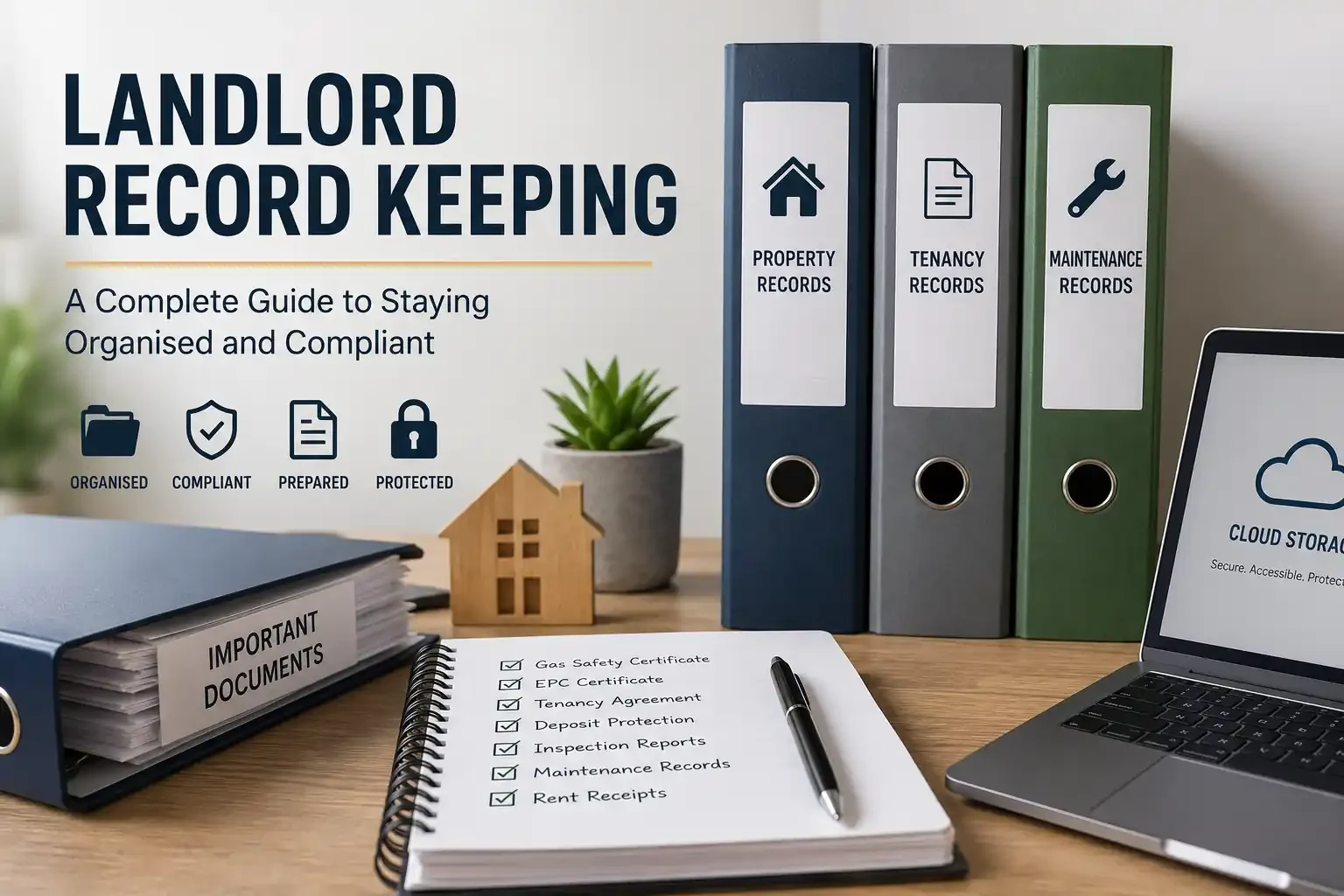
A landlord record keeping guide is an essential resource for any UK landlord who wants to stay organised, remain compliant and protect their property investment. While many landlords focus on obtaining the correct certificates and meeting legal obligations, keeping accurate and well-organised records is often overlooked. Yet good record keeping forms the foundation of effective landlord compliance and can make a significant difference when managing tenancies, responding to enquiries or demonstrating that legal responsibilities have been met.
Maintaining comprehensive records can help protect landlords during local authority inspections, deposit disputes and legal proceedings. Whether you need to prove that a gas safety check was completed on time, demonstrate that the prescribed information was served correctly or provide evidence of repairs carried out at the property, having the right documentation readily available can save considerable time, expense and stress. Well-kept records also help build trust with tenants by showing that you take your responsibilities seriously.
In addition, keep your financial records organised in one place; create your UK Landlord Income & Expense Tracker for a better and practical way to record rental income, property expenses, rent payments and cash flow using Microsoft Excel or Google Sheets.
Good documentation is equally valuable for the day-to-day management of your rental properties. Keeping accurate records of rental income, maintenance costs, inspections and compliance certificates makes it easier to monitor your portfolio, prepare information for your accountant and meet your tax obligations. An organised record keeping system can also help you track important renewal dates, reducing the risk of missing critical compliance deadlines.
In this landlord record keeping guide, you’ll learn which documents every UK landlord should keep, how long different records should be retained, practical ways to organise both digital and paper files, and the common record keeping mistakes to avoid. By following our UK Landlord Compliance Index highlights, and these best practices, you can reduce compliance risks, improve the efficiency of your property management and better protect your investment for the long term.
What Is Landlord Record Keeping?
Landlord record keeping is the process of creating, organising and securely storing all the documents and information related to managing a rental property. These records provide evidence that you have fulfilled your legal responsibilities, managed your property professionally and maintained clear communication with your tenants. They include everything from tenancy agreements and safety certificates to rent statements, maintenance invoices and inspection reports.
Effective record keeping goes beyond simply storing paperwork in a filing cabinet or saving random files on a computer. A well-organised system ensures documents are easy to find, kept up to date and retained for the appropriate length of time. Instead of searching through emails or folders, landlords should be able to quickly access the right information whenever it is needed.
Organised records matter because they reduce the risk of missed compliance deadlines and provide valuable evidence if questions or disputes arise. Keeping copies of safety certificates, deposit protection information, inspection reports and maintenance records can help demonstrate that you have met your legal obligations and managed your property responsibly.
Good landlord record keeping also supports overall compliance. Many landlord obligations require more than simply completing a task, they require you to prove it was completed correctly and on time. Without accurate records, it can be difficult to demonstrate compliance during an inspection, respond to an HMRC enquiry or defend your position in a dispute. By maintaining a structured record keeping system, landlords can reduce legal and financial risks while managing their rental properties with greater confidence.
Record keeping is just one part of meeting your legal responsibilities as a landlord. For a broader understanding of your obligations, read our landlord compliance help for landlords.
Why Landlord Record Keeping Matters for UK Landlords
Good record keeping is more than an administrative task. It is an essential part of responsible property management that helps landlords remain compliant, protect their investment and respond confidently when questions or issues arise. Whether you own one buy-to-let property or manage a larger portfolio, organised records can save time, reduce risk and make day-to-day management far more efficient.
Legal Compliance
Many landlord responsibilities require documented evidence, not just action. Keeping records of safety certificates, tenancy agreements, deposit protection, inspections and legal notices can help demonstrate that you have met your obligations if requested by a local authority, tribunal or court.
Tenant Safety
Maintaining records of gas safety checks, electrical inspections, smoke and carbon monoxide alarm testing and maintenance work helps show that you have taken reasonable steps to provide a safe home for your tenants. It also makes it easier to track renewal dates and avoid missing important compliance deadlines.
Financial Management
Accurate financial records help you monitor rental income, maintenance costs, insurance premiums and other property expenses. This gives you a clearer understanding of your property’s performance and makes budgeting for future repairs and improvements much easier.
Meeting HMRC Requirements
Keeping organised financial records can simplify tax reporting and support your claims for allowable expenses. If HMRC requests information about your rental income or expenses, having complete and accurate records can make the process far less stressful.
Easier Property Management
An organised record keeping system allows you to quickly find tenancy documents, contractor invoices, inspection reports and communication records whenever they are needed. This improves efficiency and helps you manage your rental property more professionally.
Faster Dispute Resolution
Disagreements over repairs, deposits or tenancy obligations can often be resolved more quickly when supported by clear documentation. Records such as photographs, inspection reports, emails and maintenance invoices provide valuable evidence that can help establish the facts.
Better Preparation for Property Sales
If you decide to sell your rental property, organised records can help demonstrate that it has been well managed. Buyers, solicitors and mortgage lenders may request documents relating to compliance, maintenance and tenancy history, making a complete record system a valuable asset during the sales process.
Reduced Stress
Perhaps the greatest benefit of good record keeping is peace of mind. Knowing that important documents are organised, secure and easy to access means you can spend less time searching for paperwork and more time focusing on managing and growing your property portfolio.
Essential Documents Every Landlord Should Keep
Maintaining a complete set of landlord records is one of the simplest ways to stay organised and demonstrate compliance. While the exact documents you need may vary depending on your property and tenancy, every UK landlord should keep certain core records throughout the tenancy and, where appropriate, after it has ended. The following documents form the foundation of an effective landlord record keeping system.
Tenancy Agreements
A signed tenancy agreement is one of the most important documents a landlord should retain. It sets out the rights and responsibilities of both parties, including the rent, tenancy term, deposit amount and other agreed conditions. Keep a signed copy of every tenancy agreement, along with any renewals or amendments.
Tenant Referencing Documents
If you carried out tenant referencing before granting the tenancy, keep copies of the relevant documents. These may include credit checks, employment references, previous landlord references and affordability assessments. These records demonstrate that reasonable checks were completed before the tenancy began.
Inventory Reports
A detailed inventory records the condition and contents of the property at the start of the tenancy. Including photographs alongside written descriptions provides additional evidence and can be invaluable if disagreements arise over damage or missing items.
Check-In and Check-Out Reports
Check-in and check-out reports document the property’s condition when tenants move in and when they leave. Comparing these reports helps identify any changes beyond fair wear and tear and can support decisions regarding the return of the tenant’s deposit.
Deposit Protection Records
Where a tenancy deposit has been taken, landlords should keep records confirming that it was protected within the required timescales. Retain the deposit protection certificate, scheme details and any correspondence relating to the deposit throughout the tenancy.
Deposits must be protected in an approved tenancy deposit scheme where required by law. GOV.UK explains the rules for tenancy deposit protection.
Rent Payment Records
Accurate rent payment records help track income and identify any missed or late payments. Whether you use bank statements, accounting software or rent schedules, maintaining a clear payment history is useful for financial management and resolving payment disputes.
Prescribed Information
If you are required to provide prescribed information to your tenant, keep copies of the documents served and evidence of when and how they were provided. These records may be important if questions arise about compliance later.
Guarantor Agreements (Where Applicable)
If a guarantor has agreed to support the tenancy, retain a signed copy of the guarantor agreement together with any supporting documentation. These records may become important if you need to recover unpaid rent or other costs covered by the agreement.
Safety Certificates and Compliance Records
Safety certificates and compliance records are among the most important documents every landlord should retain. They demonstrate that you have met key legal obligations, taken reasonable steps to protect your tenants and maintained your property to the required standards. Losing these records could make it difficult to prove compliance during a local authority inspection, tenancy dispute or legal proceeding. Keeping them organised and up to date should therefore be a priority for every landlord.
Keeping accurate records is particularly important for recurring landlord safety inspections and checks, where landlords may need to demonstrate when an inspection took place and what action followed.
Gas Safety Certificate
A valid Gas Safety Certificate confirms that all gas appliances, fittings and flues have been inspected by a Gas Safe registered engineer. Keep copies of current and previous certificates, as they may be required if questions arise about gas safety compliance.
Electrical Installation Condition Report (EICR)
The EICR records the condition of the property’s fixed electrical installation and identifies any defects requiring attention. Retain copies of every inspection report, together with evidence that any recommended remedial work has been completed.
Energy Performance Certificate (EPC)
An Energy Performance Certificate provides information about a property’s energy efficiency and is required in many rental situations. Keep both current and expired EPCs as part of your property’s compliance history.
Smoke Alarm Testing Records
Although there is no legal requirement to maintain formal testing records, documenting when smoke alarms were installed, inspected and tested provides useful evidence that you have taken reasonable steps to meet your responsibilities.
Carbon Monoxide Alarm Checks
Keep records of carbon monoxide alarm installations, testing dates and any replacements. These records help demonstrate that required alarms have been installed and maintained throughout the tenancy.
PAT Testing Records (Where Applicable)
Portable Appliance Testing (PAT) records should be retained where landlords provide electrical appliances as part of a furnished tenancy. Keeping inspection reports and test results helps demonstrate that supplied appliances have been checked for safety.
Legionella Risk Assessment
Where a Legionella risk assessment has been carried out, retain a copy of the assessment together with records of any actions taken to manage identified risks. This helps demonstrate that you have considered your responsibilities regarding water safety.
Fire Risk Assessments (HMOs)
For Houses in Multiple Occupation (HMOs) and other properties where fire risk assessments are required, keep copies of the assessment, fire safety inspections and evidence that recommended improvements have been completed.
Licensing Documents
If your property requires a landlord, selective, additional or HMO licence, retain copies of the licence, application documents, renewal confirmations and any correspondence with the local authority.
Right to Rent Records
Keep copies of the Right to Rent checks completed before the tenancy began, together with records showing when the checks were carried out. Where follow-up checks are required, retain evidence that they were completed within the appropriate timescales.
Property Maintenance Landlord Record Keeping
Keeping detailed property maintenance records helps landlords demonstrate that repairs have been addressed promptly and that the property has been maintained to a safe and habitable standard. These records can prove invaluable during tenant disputes, insurance claims, compliance inspections or when preparing a property for sale. A well-organised maintenance history also makes it easier to identify recurring issues and plan future works.
Repair Requests
Keep a record of every repair request received from tenants, regardless of how it was reported. This may include emails, text messages, online maintenance forms or letters. Recording the date the issue was reported and the action taken helps demonstrate that repairs were handled appropriately.
Contractor Invoices and Receipts
Retain invoices, quotations and receipts for all maintenance and repair work carried out on the property. These documents provide evidence of the work completed, the contractor used and the associated costs. They are also useful for budgeting and tax purposes.
Maintenance Schedules
Keeping a maintenance schedule helps ensure routine tasks are completed on time. This may include servicing heating systems, gutter cleaning, roof inspections, pest control, external decorating and other planned maintenance that helps protect the property’s condition.
Before and After Photographs
Photographs taken before and after repairs or improvement works provide valuable visual evidence of the property’s condition. They can support insurance claims, help resolve disputes with tenants and demonstrate that maintenance issues have been properly addressed.
Warranties and Guarantees
Keep copies of warranties, guarantees and installation certificates for major repairs, replacement appliances and improvement works. These documents may be required if faults develop during the warranty period or if future owners request evidence of completed works.
Appliance Servicing Records
Where appliances are provided as part of the tenancy, retain records of any servicing, inspections or repairs carried out. Keeping a servicing history can help extend the lifespan of appliances while demonstrating that they have been maintained responsibly.
Insurance Claims
If you make an insurance claim relating to your rental property, retain copies of claim forms, photographs, assessor reports, settlement correspondence and repair invoices. These records may be useful if further claims arise or if insurers request additional information in the future.
Emergency Repair Records
Emergency repairs often require immediate action, making it especially important to keep clear records. Document when the emergency was reported, the steps taken to make the property safe, the contractors instructed and the date the work was completed. This information demonstrates that you responded promptly and fulfilled your responsibilities as a landlord.
Financial Records Every Landlord Should Keep
Maintaining accurate financial records is essential for managing a successful rental property. Good financial record keeping helps you monitor profitability, prepare tax returns, support claims for allowable expenses and provide evidence if HMRC requests information. Keeping these records organised also gives you a clearer picture of your property’s financial performance and helps you make informed investment decisions.
Rental Income
Keep a complete record of all rent received, including payment dates, amounts and the payment method. Bank statements, rent schedules and accounting software can all provide a reliable record of rental income and help identify any late or missed payments.
Mortgage Interest
Retain annual mortgage statements and records of mortgage interest paid on your rental property. These documents may be required for financial reporting and should be kept alongside your other property finance records.
Letting Agent Invoices
If you use a letting or managing agent, keep copies of all invoices and statements. These records provide evidence of management fees, tenant find services, inspection charges and any additional services provided during the tenancy.
Insurance Documents
Keep copies of your landlord insurance policy, renewal notices, premium payments and any correspondence with your insurer. These records help demonstrate that appropriate cover has been maintained and can be useful if you need to make a future claim.
Service Charges
For leasehold properties, retain statements and receipts for service charges paid to the freeholder or management company. These records help track ongoing ownership costs and support your financial records.
Ground Rent
If your rental property is leasehold, keep records of all ground rent payments and related correspondence. Maintaining these documents helps demonstrate that payments have been made and can assist when selling the property.
Maintenance Costs
Keep invoices and receipts for repairs, routine maintenance and servicing carried out on the property. These records help monitor expenditure and provide supporting evidence for your financial accounts.
Improvement Works
Retain documentation relating to improvements or upgrades, such as kitchen replacements, bathroom renovations or energy efficiency improvements. Keeping detailed records of these works can be helpful for future financial planning and property sales.
Capital Expenditure
Where you incur significant capital expenditure, keep contracts, invoices and payment records together with any supporting documentation. Maintaining a clear history of major investments helps you track the long-term value of your property.
Utility Bills
If you are responsible for paying utilities during vacant periods or under the tenancy agreement, retain copies of all utility bills and payment confirmations. These records help maintain accurate property accounts.
Tax Records
Keep copies of tax returns, expense schedules, supporting receipts and any other documents used to prepare your rental property accounts. Well-organised tax records make it easier to meet your reporting obligations and respond to any HMRC enquiries.
Accountant Correspondence
If you use an accountant or tax adviser, retain important emails, letters, reports and tax advice relating to your rental properties. These records provide a useful reference for future reporting and help ensure consistency in your financial management.
Communication Records with Tenants
Maintaining clear communication records is an important part of effective landlord record keeping. Conversations with tenants often contain important information about repairs, inspections, rent payments and tenancy matters. Keeping copies of these communications creates a reliable record of what was discussed, when it was discussed and any actions that were agreed. If a dispute arises, a well-documented communication history can provide valuable evidence to support your position.
Emails
Keep copies of all important emails exchanged with tenants, particularly those relating to repairs, inspections, rent, tenancy renewals, complaints and legal notices. Creating a dedicated folder for each property can make these emails easier to locate when needed.
Letters
Retain copies of any letters sent to or received from tenants. This includes formal notices, tenancy correspondence and any written agreements reached during the tenancy. Where possible, keep proof of posting or delivery alongside the letter.
Text Messages
Text messages can provide useful evidence of conversations about maintenance requests, access arrangements or rent payments. If important discussions take place by text, consider saving screenshots or backing up the messages securely.
WhatsApp Messages
Many landlords and tenants communicate through WhatsApp because it is quick and convenient. Keep copies of important conversations, photographs shared by tenants and any agreements reached through the platform. Regularly backing up your WhatsApp messages can help prevent valuable information from being lost.
Notices Served
Keep copies of all notices served during the tenancy, together with evidence of when and how they were delivered. This may include possession notices, rent increase notices or any other statutory notices required during the tenancy.
Complaints
Record all complaints made by tenants, along with your response and any actions taken to resolve the issue. Maintaining a clear record demonstrates that concerns were handled professionally and within a reasonable timeframe.
Inspection Reports
Retain copies of routine inspection reports together with any photographs taken during inspections. These records help document the condition of the property throughout the tenancy and can support decisions relating to maintenance or deposit deductions.
Maintenance Updates
Keep records of updates provided to tenants about repair work, contractor appointments and completed maintenance. These communications help demonstrate that you kept tenants informed and responded appropriately to reported issues.
A complete communication history can often become one of the strongest forms of evidence if disagreements arise. Whether dealing with a deposit dispute, an insurance claim, a complaint to the local authority or court proceedings, organised communication records can help establish the facts and demonstrate that you acted reasonably and fulfilled your responsibilities as a landlord.
Digital vs Paper Records
There is no single best way to store landlord records. Both digital and paper records have their advantages, and many landlords find that using a combination of the two provides the greatest level of organisation and security. The key is to ensure your records are accurate, easy to access and protected against loss or damage.
1. Digital Records
Digital record keeping has become increasingly popular because it allows landlords to manage documents more efficiently and access them from almost anywhere.
Easy Searching
Digital files can be organised into folders by property, tenant or document type, making it much quicker to locate a specific record than searching through paper files.
Cloud Backup
Storing records in a secure cloud storage service provides an additional layer of protection if your computer or mobile device is lost, damaged or stolen. Regular backups also reduce the risk of losing important compliance documents.
Secure Sharing
Digital records can be shared quickly with accountants, solicitors, letting agents or contractors when required. Password protection and secure file-sharing tools can help keep sensitive information safe.
Less Physical Storage
Electronic records reduce the need for filing cabinets and paperwork, making them easier to manage, particularly for landlords with multiple rental properties.
2. Paper Records
Although digital records offer many advantages, paper documents still have an important role in landlord record keeping.
Original Signed Documents
Some documents, such as signed tenancy agreements or guarantor agreements, may be useful to retain in their original paper format, particularly where an original signature could become important.
Familiar and Easy to Use
Many landlords prefer paper records because they are straightforward to organise and do not rely on technology or internet access.
Physical Evidence
Original paper documents can provide additional reassurance if evidence is required during legal proceedings or when verifying signed agreements.
Which Is Best?
For most landlords, the best approach is to use both digital and paper records where appropriate. Keep original signed documents safely stored in a secure location, while scanning and saving digital copies for everyday access and backup. This combined approach provides the convenience of digital record keeping together with the security of retaining important original documents, helping ensure your landlord records remain organised, accessible and well protected.
Table: Landlord Record Keeping: Digital vs Paper Records Comparison
| Feature | Digital Records | Paper Records |
|---|---|---|
| Ease of searching | Quickly searchable by folder, file name or keyword | Manual searching through folders and files |
| Storage | Requires very little physical space | Requires filing cabinets or storage boxes |
| Backup | Can be backed up automatically to secure cloud storage or external drives | Vulnerable to fire, flooding or accidental loss unless copied |
| Sharing | Easy to share securely with accountants, solicitors or letting agents | Usually requires photocopying, scanning or posting |
| Original signatures | Scanned copies are convenient but may not replace original signed documents in every situation | Retains original signed documents where needed |
| Accessibility | Accessible from multiple devices with appropriate security | Usually only available where the documents are physically stored |
| Organisation | Easy to organise by property, tenant or document type | Can become difficult to manage as paperwork increases |
| Security | Protected with passwords, encryption and secure cloud storage | Protected by locked cabinets but can be lost, stolen or damaged |
| Best for | Everyday record management, backups and quick access | Original legal documents and signed agreements |
Recommendation: Most UK landlords benefit from using a hybrid approach by keeping original signed documents in paper format while storing scanned digital copies for easy access, secure backup and efficient day-to-day property management. This provides the convenience of digital records without losing the security of retaining important original documents.
How Long Should Landlords Keep Records?
Keeping landlord records for the appropriate length of time is just as important as creating them in the first place. While some documents only need to be retained until they expire, others should be kept for several years after a tenancy has ended. Holding onto records for the recommended period can help protect you during disputes, legal proceedings, tax enquiries and future property transactions.
Recommended Record Retention Periods
| Record | Recommended Retention |
|---|---|
| Tenancy Agreement | At least 6 years after the tenancy ends |
| Gas Safety Certificates | At least 2 years |
| Electrical Installation Condition Report (EICR) | Until superseded, plus several years afterwards |
| Energy Performance Certificate (EPC) | Until the certificate expires |
| Deposit Protection Records | At least 6 years |
| Tax Records | Follow current HMRC record retention requirements |
| Repair and Maintenance Records | At least 6 years |
| Rent Payment Records and Statements | At least 6 years |
| Property Inspection Reports | At least 6 years |

These retention periods are intended as general guidance and may vary depending on your individual circumstances or changes in legislation. Landlords should regularly check the latest legal requirements and HMRC guidance to ensure they are retaining records for the appropriate length of time. When in doubt, it is often better to keep important documents for longer, provided they are stored securely and in accordance with data protection requirements.
Best Practices for Organising Landlord Records
Having the right documents is only part of effective landlord record keeping. They should also be organised in a way that makes them easy to find, secure and up to date. A structured record keeping system can save time, improve compliance and reduce stress when documents are needed for inspections, tax reporting or disputes. The following best practices can help you keep your landlord records organised throughout the life of your tenancy.
Create One Folder Per Property
Create a dedicated folder for each rental property, whether it is a physical folder, a digital folder or both. Within each property folder, organise documents into categories such as tenancy documents, compliance certificates, maintenance records, financial records and tenant communications.
Use Cloud Storage
Store digital copies of your records in a reputable cloud storage service. Cloud storage allows you to access documents from multiple devices while providing an extra layer of protection if your computer or phone is lost, stolen or damaged.
Keep Scanned Copies
Scan important paper documents and save them as digital files. Having electronic copies of tenancy agreements, certificates, invoices and inspection reports makes it easier to retrieve and share documents whenever they are required.
Use Consistent File Names
Adopt a consistent naming convention for your files. For example, include the property address, document type and date, such as 123 High Street – Gas Safety Certificate – 2026.pdf. Consistent file names make documents much easier to locate.
Backup Your Records Regularly
Do not rely on a single storage location. Keep regular backups of your digital records using an external hard drive or an additional secure cloud service. Regular backups reduce the risk of losing valuable information due to technical failures or accidental deletion.
Review Your Records Annually
Set aside time each year to review your landlord records. Remove duplicate files, archive older documents, check that certificates are up to date and ensure all required records have been retained. An annual review helps keep your record keeping system accurate and organised.
Separate Personal and Business Records
Avoid mixing personal documents with records relating to your rental properties. Keeping separate files for property-related income, expenses and compliance documents makes financial management and tax reporting much simpler.
Restrict Access to Sensitive Information
Landlord records often contain personal information about tenants. Store these documents securely and limit access to authorised individuals only. Using password-protected digital folders, secure cloud storage and locked filing cabinets can help protect sensitive data and support compliance with data protection requirements.
By following these best practices, landlords can create a record keeping system that is organised, secure and easy to maintain. A little time spent organising documents today can prevent significant problems and unnecessary stress in the future.
Common Landlord Record Keeping Mistakes
Even well-intentioned landlords can make mistakes when managing their records. In many cases, problems arise not because landlords ignore their responsibilities, but because important documents are misplaced, records are incomplete or there is no consistent system in place. Avoiding the following common mistakes can help you stay organised, remain compliant and reduce the risk of costly disputes.
Losing Important Certificates
Misplacing documents such as Gas Safety Certificates, Electrical Installation Condition Reports (EICRs) or Energy Performance Certificates (EPCs) can make it difficult to demonstrate compliance. Store both digital and paper copies securely and keep them organised by property.
Missing Inspection Reports
Regular property inspections provide valuable evidence of the property’s condition throughout the tenancy. Failing to keep inspection reports and photographs can weaken your position if disputes arise over damage, maintenance or deposit deductions.
Poor Organisation
Keeping documents across multiple email accounts, paper files and computer folders without a clear structure makes it harder to find information when it is needed. A consistent filing system helps save time and reduces the risk of important records being overlooked.
Keeping Incomplete Tenant Records
Incomplete tenant files can create unnecessary difficulties during the tenancy. Ensure each tenant’s records include key documents such as the signed tenancy agreement, referencing information, deposit protection details, Right to Rent checks where applicable and important correspondence.
Failing to Back Up Records
Relying on a single computer or mobile device to store important documents increases the risk of losing valuable information. Regular backups using secure cloud storage or an external drive help protect your records against accidental deletion, theft or hardware failure.
Failing to Document Repairs
Completing repairs without keeping invoices, photographs or contractor details can make it difficult to prove that maintenance issues were addressed. Maintain a record of repair requests, work carried out and supporting documentation for every significant repair.
Ignoring Renewal Dates
Allowing certificates, licences or inspections to expire can lead to compliance issues. Keeping a record of renewal dates and setting reminders helps ensure important documents remain valid and up to date.
Poor Communication Records
Failing to retain emails, letters, text messages or WhatsApp conversations with tenants can leave gaps in your evidence if disagreements arise. Keeping a clear communication history helps demonstrate what was discussed, when it was discussed and the actions that were taken.
By recognising and avoiding these common record keeping mistakes, landlords can build a more organised and reliable system that supports compliance, protects their investment and makes managing rental properties far less stressful.
Poor record keeping is only one of the mistakes landlords can make. Learn about other common pitfalls in our guide to common landlord compliance mistakes.
How Good Record Keeping Helps During Disputes
Disputes can arise even when landlords manage their properties responsibly. Whether the issue relates to a tenancy deposit, property repairs or compliance, having accurate and well-organised records can make resolving the matter much easier. Documented evidence provides a clear timeline of events and demonstrates the steps you have taken to meet your legal responsibilities. In many situations, written records carry far more weight than relying on memory alone.
Deposit Disputes
Deposit disputes often centre on the condition of the property at the end of a tenancy. Signed inventory reports, check-in and check-out reports, photographs, maintenance records and communication with tenants can help support your position if deductions from the deposit are challenged.
Court Proceedings
If a dispute reaches court, organised records can strengthen your case. Documents such as tenancy agreements, rent payment records, inspection reports, safety certificates and copies of notices served provide evidence that you have acted reasonably and complied with your legal obligations.
Local Authority Investigations
Local authorities may investigate complaints relating to housing standards or landlord compliance. Being able to produce records such as Gas Safety Certificates, EICRs, EPCs, repair logs and inspection reports can demonstrate that you have taken appropriate steps to manage the property responsibly.
Insurance Claims
If your rental property suffers damage caused by events such as flooding, fire or vandalism, maintenance records, photographs, contractor invoices and previous inspection reports can support your insurance claim. Keeping these documents organised may also help speed up the claims process.
HMRC Enquiries
Should HMRC request information about your rental income or allowable expenses, accurate financial records, invoices, receipts and bank statements will help support your tax return. Well-organised documentation can make responding to enquiries quicker and less stressful.
Tenant Complaints
When tenants raise concerns about repairs, communication or the condition of the property, keeping copies of emails, letters, text messages, inspection reports and maintenance updates can help demonstrate how and when you responded. A complete communication history often provides a clear picture of the actions taken to resolve the issue.
Good record keeping is ultimately about protecting yourself as well as your tenants. When supported by clear documentation, facts are easier to establish and misunderstandings are less likely to escalate. By maintaining accurate records throughout the tenancy, landlords place themselves in a much stronger position should a dispute or investigation ever arise.
How Toyin Consulting Helps Landlords Stay Organised
Staying organised is one of the most effective ways to reduce compliance risks and manage rental properties with confidence. At Toyin Consulting, we understand that many landlords struggle to keep track of changing regulations, renewal dates and the growing number of documents required throughout a tenancy. Our services are designed to help landlords build practical systems that make compliance simpler and more manageable.
Landlord Compliance Training
Our landlord compliance training helps landlords understand their legal responsibilities and the records they should maintain. From safety certificates and tenancy documentation to compliance deadlines and best practices, we provide practical guidance that can be applied to real rental properties.
If you would like personalised support to improve your systems and grow your portfolio, our property coaching for landlords can help you build practical processes that support long-term success.
Property Coaching
Through our property coaching services, we work with landlords to improve the way they manage their portfolios. This includes developing organised record keeping systems, improving operational processes and identifying areas where compliance risks can be reduced.
Compliance Guidance
Landlord legislation continues to evolve, making it important to keep accurate records and stay informed about your obligations. We provide practical compliance guidance that helps landlords understand what documents they should retain, how to organise them and how to prepare for inspections, audits or tenancy disputes.
Building Practical Systems
Rather than relying on paperwork scattered across emails, filing cabinets and computer folders, we help landlords develop simple and effective systems for storing and managing their records. Well-organised systems make it easier to find important documents, monitor renewal dates and manage multiple properties more efficiently.
Reducing Compliance Risks
Good record keeping is one of the foundations of landlord compliance. By implementing structured processes and maintaining accurate records, landlords can reduce the likelihood of missed deadlines, improve their response to disputes and demonstrate that they have fulfilled their legal responsibilities.
Whether you are a first-time landlord or manage an established property portfolio, Toyin Consulting can help you build the knowledge and systems needed to stay organised and compliant. If you would like practical support with landlord compliance or personalised property coaching, explore our services and take the next step towards managing your properties with confidence – Contact ToyinConsulting.
Frequently Asked Questions
What records should landlords keep?
Landlords should keep tenancy agreements, tenant referencing documents, inventory reports, check-in and check-out reports, deposit protection records, safety certificates, maintenance records, financial records, inspection reports and important communications with tenants. Keeping these documents organised helps demonstrate compliance and supports effective property management.
Landlords should also keep up to date with their legal responsibilities by reviewing the latest guidance on renting out your property from GOV.UK.
How long should landlords keep tenancy agreements?
As a general guide, landlords should retain tenancy agreements for at least six years after the tenancy ends. This can provide valuable evidence if legal disputes or claims arise after the tenancy has finished.
Do landlords need to keep old Gas Safety Certificates?
Yes. Landlords should keep previous Gas Safety Certificates for at least two years. Retaining older certificates helps demonstrate that gas safety inspections have been carried out as required and may be useful during inspections or disputes.
Can landlord records be stored digitally?
Yes. Digital record keeping is an effective way to organise and protect landlord documents. Many landlords store scanned copies of important records using secure cloud storage while keeping original signed documents where appropriate.
Are WhatsApp messages acceptable as evidence?
WhatsApp messages can be useful evidence when they clearly show conversations between landlords and tenants about repairs, inspections, rent payments or other tenancy matters. It is good practice to back up important conversations and retain any photographs or documents shared through the platform.
What records are required for deposit disputes?
Documents such as the tenancy agreement, inventory report, check-in and check-out reports, dated photographs, inspection records, maintenance invoices and communication with the tenant can all help support your position during a deposit dispute.
What is the easiest way to organise landlord documents?
A simple approach is to create one folder for each rental property and organise documents into categories such as tenancy records, compliance certificates, maintenance records, financial records and tenant communications. Keeping both digital backups and original paper documents where appropriate can make your record keeping system more secure and easier to manage.
Final Thoughts
Good record keeping is one of the simplest yet most effective ways to protect yourself as a landlord. It supports legal compliance, reduces the risk of costly mistakes, simplifies tax reporting and property management, and provides valuable evidence if disputes or inspections arise. By keeping your records organised and up to date, you can manage your rental properties with greater confidence and professionalism.
If you’d like expert guidance on building effective compliance systems, explore Toyin Consulting’s landlord compliance training and property coaching services. We can help you stay organised, reduce compliance risks and manage your property portfolio with confidence.


